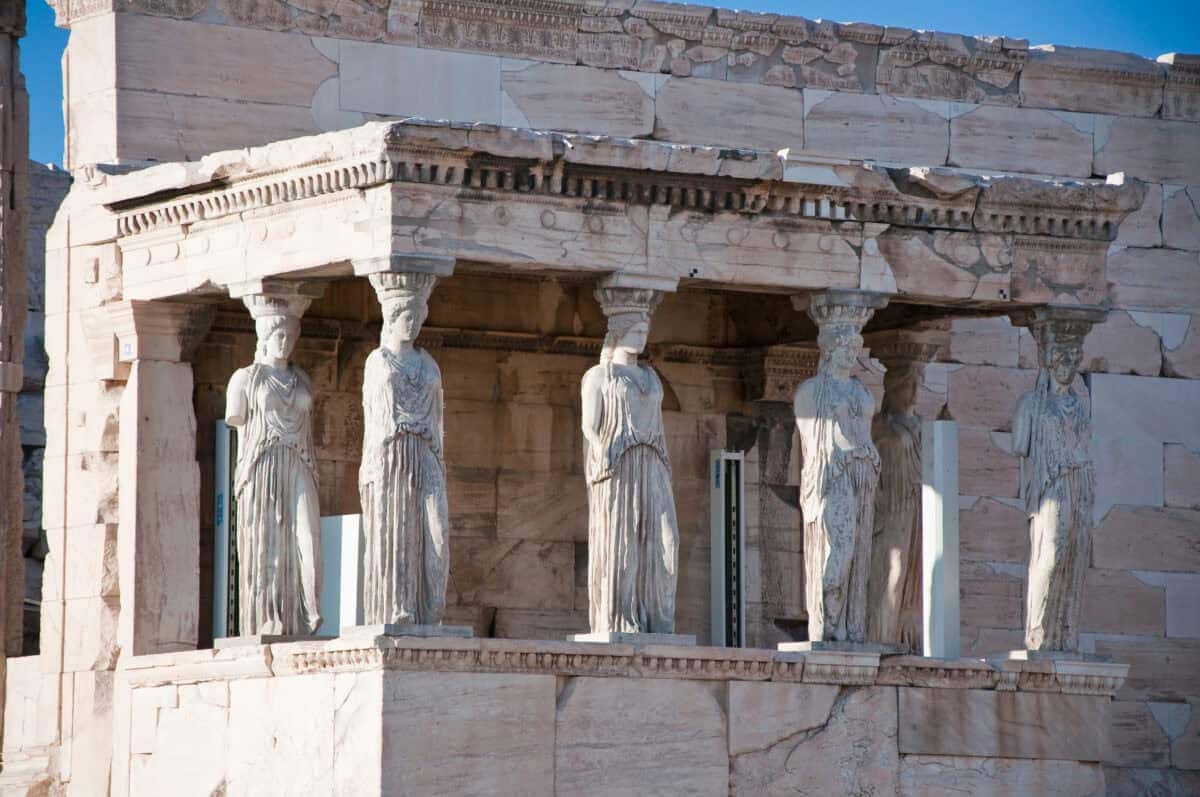
The best things to do in Greece split into two routes. First-timers should follow the Classic Route: the Acropolis in Athens, a caldera sunset cruise in Santorini, and the cliff-top monasteries of Meteora. Return visitors should switch to the Slow Route: gorge hikes and food in Crete, or the quiet beaches and castle towns of the Peloponnese. Below are 30 specific things to do, grouped by region, each with a real cost, the best time to go, and an honest reality check.

Written and fact-checked by a Greek local. Prices, opening hours, and access notes last verified in June 2026. I was born and raised in Greece and lived on Santorini for years, so this list skips the generic “top 10” filler and tells you what is actually worth your time – and what to skip.
Our #1 pick: a sunset catamaran cruise in Santorini. If you book one paid experience on your whole trip, make it this one.
Greece at a Glance: Which Region Is Right for You?
Greece is not one trip – it is several. Use this table to decide where to spend your days, then jump to that region below. Most first-timers do Athens plus two islands over 10 to 14 days; that is also how we’d plan a first visit.
| Region | Best for | Don’t-miss activity | Suggested days |
|---|---|---|---|
| Athens & Attica | History & first-timers | Acropolis & Acropolis Museum | 2 |
| Santorini | Sunsets & volcano | Caldera sunset cruise | 3 |
| Mykonos | Beach clubs & nightlife | Old Town & Paradise Beach | 2 |
| Crete | Food, beaches & hiking | Samaria Gorge + Chania | 4–5 |
| Mainland (Meteora & Delphi) | Monasteries & myth | Meteora monasteries | 2 |
| Peloponnese | Crowd evasion | Nafplio, Mycenae & Epidaurus | 2–3 |
Things to Do in Athens & Attica (The Classics)
Athens is where almost every Greece trip starts. Two days covers the headline sites and a couple of neighbourhoods. The city is not the prettiest capital in Europe, but the concentration of 2,500-year-old monuments is unmatched anywhere on earth.
1. Visit the Acropolis and the Parthenon

The Acropolis is the limestone hill; the Parthenon is the temple on top of it (447–432 BC), the high point of Classical Greek architecture. It is the one site you cannot skip on a first trip to Greece.
Cost: €30 full / €15 reduced (the old combined-site ticket is discontinued). Best time: the 8:00 AM opening, or after 5:00 PM. Reality check: there is almost no shade and summer afternoons hit 35°C / 95°F – bring water, and buy a timed slot online to skip the queue.
2. See the Sculptures in the Acropolis Museum

The Acropolis Museum is the best museum in Greece, with the Parthenon sculptures displayed at full scale on a glass floor that frames the real temple through the windows. Pair it with the rock the same day.
Cost: separate ticket from the Acropolis (combined options exist). Best time: midday, as an air-conditioned escape from the heat. Reality check: the top-floor Parthenon Gallery is the highlight – do not run out of time before you reach it.
3. Explore the Ancient Agora and the Temple of Hephaestus

The Agora was the public square where free Athenians argued and voted – the literal birthplace of democracy. Its Temple of Hephaestus is one of the best-preserved ancient temples in Greece, a few minutes’ walk below the Acropolis.
Cost: a 6-site combo ticket (Acropolis, Agora, Roman Forum, Kerameikos, Library of Hadrian, Olympieion) is the best value. Best time: late afternoon, after the Acropolis. Reality check: on-site signage is poor – a guide or the combo audio is worth it here.
4. Wander Plaka and the Island-Like Anafiotika

Plaka is the old town directly under the Acropolis: car-free lanes, 19th-century houses, and tavernas, with the whitewashed Anafiotika pocket that feels like a Cycladic island dropped into the city. It is the best place in Athens for an evening stroll and dinner.
Cost: free to wander. Best time: early evening, for dinner and the light. Reality check: the restaurants on Plaka’s main drag are tourist traps – walk two streets uphill into Anafiotika or over to Psyrri for real food.
5. Tour the National Archaeological Museum (and the Cycladic & Byzantine Museums)

If you only have time for one museum beyond the Acropolis Museum, make it the National Archaeological Museum, with finds from every corner of the country. The Museum of Cycladic Art and the Byzantine and Christian Museum are excellent runners-up.
Cost: each museum is a separate, modest ticket. Best time: morning, before the afternoon heat. Reality check: the National Archaeological Museum is huge – give it 2 hours, or you’ll only scratch the surface.
6. Stand at the Temple of Olympian Zeus and the Panathenaic Stadium

The Temple of Olympian Zeus was the largest temple in Greece, and a short walk away sits the all-marble Panathenaic Stadium that hosted the first modern Olympic Games in 1896. Together they bridge ancient and modern Athens in an easy half-hour loop.
Cost: the Olympieion is on the 6-site combo; the stadium is a small separate ticket. Best time: late afternoon. Reality check: both are quick stops – 20–30 minutes each – so chain them with Plaka rather than building a half-day around them.
7. Watch the Sunset at Cape Sounion’s Temple of Poseidon
An hour down the Attica coast, the Temple of Poseidon sits on a headland above the sea – one of the best sunset spots near Athens, and where Byron carved his name into a column. It is the easiest half-day escape from the city.
Cost: small site ticket; cheapest by guided sunset tour or rental car. Best time: arrive 45 minutes before sunset. Reality check: it gets windy and there is little shelter – bring a layer for the evening drive back.
Things to Do in Santorini (Volcanic Geotourism & Sunsets)
If you only visit one Greek island, make it Santorini. The whole island is the rim of a flooded volcano in the Aegean Sea, which is why the caldera views look like nowhere else. Plan at least three nights – here is exactly how many days you need in Santorini and where to stay.
8. Watch the Caldera Sunset in Oia and Fira

Oia and Fira are the two clifftop towns with the postcard architecture and volcano views. They are stunning and they are busy – both things are true – and getting between them is easier once you read how to get around Santorini.
Cost: free to watch; Santorini hotels and dinners run high because demand is high. Best time: late May to June or September. Reality check: arrive in Oia 90 minutes before sunset for a spot, and do not attempt Santorini as a day trip from Athens – the ferry is 5+ hours each way.
9. Take a Sunset Catamaran Cruise

A Santorini boat tour circles the caldera, stops at the volcano and its warm thermal springs, and ends with the sunset from the water instead of a packed terrace. It is the experience people remember most from their trip.
Cost: roughly €100–€200 per person for a quality 5-hour semi-private catamaran with food and drinks. Best time: the late-afternoon sunset departure. Reality check: skip the big 50+ passenger wooden boats; the semi-private catamarans cost more but you actually get to swim and eat without a queue.
10. Tour the Santorini Wineries and Taste Assyrtiko

Santorini’s volcanic soil produces a bone-dry white called Assyrtiko that you will not taste anywhere else. A guided Santorini wine tour hits three cellars in an afternoon, far better than driving yourself between tastings.
Cost: roughly €80–€130 per person for a 3-winery guided tour with transport. Best time: late afternoon, finishing at Santo Wines in Pyrgos for the caldera sunset. Reality check: there are 16+ wineries and you cannot do them all – a tour with a driver beats renting a car you can’t drive after tasting.
11. Walk Through Akrotiri, the “Greek Pompeii”
Akrotiri is a Bronze-Age Minoan town on Santorini that was buried – and preserved – by the same volcanic eruption that shaped the caldera. Multi-storey buildings and frescoes survive under a modern shelter, and the nearby Red Beach shows the volcanic rock up close.
Cost: modest site ticket. Best time: midday – the site is covered and shaded. Reality check: the Red Beach itself has had rockfall closures; admire it from the viewpoint rather than scrambling under the cliffs.
Things to Do in Mykonos (Beach Clubs & Nightlife)
Mykonos has the best beach clubs and nightlife in Greece – and the highest prices. We used to leave it off this list; that was a mistake, because it is a great island if you go in knowing what it is. Here is the full guide to things to do in Mykonos.
12. Get Lost in Mykonos Town, Little Venice & the Windmills

Mykonos Town (Chora) is a maze of whitewashed lanes built to confuse pirates, opening onto the waterfront of Little Venice and the row of 16th-century windmills. It is genuinely beautiful in the early morning before the crowds and the cruise passengers arrive.
Cost: free to wander; drinks in Little Venice are premium. Best time: 8–10 AM for empty lanes, or sunset at the windmills. Reality check: Chora is a deliberate maze with no straight streets – allow extra time to find your way out.
13. Spend a Day at a Mykonos Beach Club
Paradise, Super Paradise, and Psarou are the famous beach clubs, with DJs, day-parties, and front-row sunbeds. This is the Mykonos people come for – and it runs on a luxury-first economy.
Cost: front-row sunbeds at clubs like Nammos and Scorpios run €70–€110+ per person, on top of a minimum spend of €50–€150 per person on food and drinks. Best time: early afternoon, before the party peaks. Reality check: a full day at a premium club can hit €200+ per person – budget travellers should pair Mykonos with a cheaper island like Naxos or Paros.
Things to Do in Crete (Gastronomy & Nature)
Crete is not a weekend island – it takes 5 to 6 hours to drive across, so you need a rental car and a plan. We recommend splitting your time between the historic east around Heraklion and the beach-heavy, walkable west around Chania; here is exactly where to stay in Crete.
14. Wander Chania’s Old Town and Venetian Harbour
Chania’s Venetian harbour and the lanes of the Splantzia quarter make it the best base in Crete for first-timers – walkable, historic, and full of real Cretan tavernas. It is the prettiest town on the island.
Cost: free to wander; meals are mid-range. Best time: a full day, with dinner in the back streets. Reality check: do not eat on the harbour front – those are overpriced tourist traps. Walk three streets back into Splantzia for authentic food.
15. Hike the Samaria Gorge

The Samaria Gorge is the longest gorge in Europe and a protected national park, with wild goats, a 1,000-year-old forest, and a finish at the isolated beach of Agia Roumeli. It is graded intermediate – long, but not technical.
Cost: €10 park entry (free under 18 and 65+). Best time: May, June, or September; the park is typically open May to mid-October only. Reality check: this is a one-way 16km hike – you finish at the sea, take a ferry out, then a bus back, so budget a full 12-hour day and 2–3 litres of water.
16. Swim at Elafonissi and Balos Beaches

Elafonissi and Balos are shallow, tropical-looking sea lagoons protected as national parks – the most famous of the Chania beaches. The water is warm, shallow, and ideal for families.
Cost: free entry; small charge for sunbeds and parking. Balos needs a 4×4 or a boat from Kissamos. Best time: arrive before 9:30 AM. Reality check: tour buses arrive around 11:00 AM and the sand only looks pink at the water’s edge in good light – both beaches are remote, so bring water and shade.
17. See Knossos and the Heraklion Archaeological Museum

Knossos is the Bronze-Age Minoan palace tied to the myth of the Minotaur, and the Heraklion Museum nearby holds its greatest treasures, including the still-undeciphered Phaistos Disc. Together they tell the story of Europe’s first advanced civilisation.
Cost: Knossos €20 full / €10 reduced; the museum is a separate ticket (combined options exist). Best time: 8:00 AM opening at Knossos, then the air-conditioned museum at midday. Reality check: Knossos has almost no shade and thin signage with heavy reconstruction – a guide turns “old walls” into a story.
Things to Do on Mainland Greece: Meteora, Delphi & the North
The mainland holds the two most dramatic non-island sights in Greece – the floating monasteries of Meteora and the oracle site of Delphi – plus a real winter season. All work as day trips or an overnight from Athens.
18. Visit the Monasteries of Meteora

Meteora is a cluster of giant rock pillars topped by six working Orthodox monasteries, some built more than 600 years ago. It is one of the most surreal landscapes in Europe and a UNESCO World Heritage Site.
Cost: €3 per monastery (€5 for Grand Meteoron); you can see 3–4 in a day. Best time: weekends, when all six are open – each closes one day a week. Reality check: there is a dress code (covered shoulders and knees; wrap skirts are often lent at the door), and it is a 4-hour drive from Athens – drive or take a guided bus, not the train.
19. Stand at the Oracle of Delphi

Delphi was the home of the famous Oracle, where ancient Greeks came for prophecy. It is a UNESCO site on the slopes of Mount Parnassus, with a Temple of Apollo, a theatre, a stadium, and a museum – and a setting as memorable as the ruins.
Cost: a combined site-and-museum ticket; about a 3-hour drive northwest of Athens. Best time: morning, before the Athens day-trip coaches arrive. Reality check: pair Delphi with the Parnassos ski village of Arachova, 30 minutes away, for a great two-day mainland loop.
20. Ski at Parnassos and Visit Arachova (Winter)

Greece has a genuine winter season almost no tourist sees. Parnassos, near Delphi and the stone village of Arachova, and Kaimaktsalan in the north are small but fun resorts – and a side of Greece worth catching from December to March.
Cost: lift passes are a fraction of the Alps. Best time: January to early March. Reality check: the resorts are small by Alpine standards – go for the experience and the village of Arachova, not for big-mountain terrain.
21. See the Royal Tombs of Vergina and Byzantine Thessaloniki

The Royal Tombs of Vergina, the burial place of Philip II (father of Alexander the Great), are northern Greece’s answer to Tutankhamun – an underground museum of gold and armour. Combine them with Thessaloniki, whose Byzantine churches are a UNESCO World Heritage Site.
Cost: modest museum ticket; easiest as a day trip from Thessaloniki. Best time: any season – the tomb museum is indoors and climate-controlled. Reality check: Vergina is over an hour from Thessaloniki, so this is a day on its own rather than a quick stop.
Things to Do in the Peloponnese (Crowd Evasion)
The Peloponnese is the return-visitor’s Greece: castle towns, empty beaches, and world-class ruins without the island prices. Base yourself in Nafplio and you can reach most of the highlights in day trips.
22. Explore Nafplio and Climb the Palamidi Fortress

Nafplio was Greece’s first capital and is its most elegant small city – Venetian houses, a seafront promenade, and the cliff-top Palamidi fortress reached by a long stone staircase. It is the perfect Peloponnese base, two hours from Athens.
Cost: free to wander; small ticket for Palamidi. Best time: climb Palamidi early, before the heat. Reality check: the fortress is a 900-step climb – go at opening or drive most of the way up and walk the last stretch.
23. Visit Mycenae and the Theatre of Epidaurus

Mycenae is the Bronze-Age citadel of Agamemnon, with its Lion Gate and beehive Tomb of Atreus; Epidaurus is the best-preserved ancient theatre in the world, with acoustics so good a whisper carries to the back row. Both are short drives from Nafplio.
Cost: a separate ticket at each; a guided tour from Athens covers both plus Nafplio. Best time: Epidaurus is most magical during a live play at the summer Athens-Epidaurus Festival (June to September). Reality check: performances are in Greek but with English surtitles, so the language is no barrier.
24. Walk Ancient Olympia and Byzantine Mystras
The ancient ruins of Olympia, in the western Peloponnese, are where the first Olympic Games were held in 776 BC – you can still run the original stadium track. Pair it with Mystras, a Byzantine ghost-city of churches and palaces climbing a hillside near Sparta.
Cost: a separate ticket at each. Best time: morning, before midday heat. Reality check: these two sit on opposite sides of the Peloponnese – pick the one that fits your route rather than trying to do both in a day.
More Greek Islands Worth the Ferry
Beyond Santorini and Mykonos, these islands reward a second trip. For couples who want calm over party, see our guide to the best Greek islands for older couples.
25. Slow Down on Naxos and Paros

Naxos and Paros are the best all-rounders in the Cyclades: long sandy beaches, real island life, mountain villages, and a fraction of Mykonos prices. They are the easiest islands to pair with Santorini for a first trip.
Cost: mid-range and far cheaper than Mykonos or Santorini. Best time: June or September. Reality check: Naxos is big – rent a car or a scooter to reach the best beaches and the inland villages like Halki.
26. See the Lunar Coves of Milos
Milos is a volcanic island ringed by surreal white rock formations, with the moon-like Sarakiniko and dozens of coves reachable only by boat. It is the Cyclades’ best-kept secret, though not for much longer.
Cost: mid-range. Best time: a boat tour around the island to reach the hidden beaches. Reality check: several of the best beaches in Milos are boat-access only, so build in at least one day on the water.
27. Sail Into the Melissani Cave on Kefalonia

Kefalonia, the largest Ionian island, hides the Melissani Cave: a collapsed cavern where a small boat glides across an underground lake lit electric blue by a hole in the roof. It is one of the most photogenic spots in Greece.
Cost: small boat-tour ticket at the cave. Best time: 11:00 AM to 1:00 PM, when the sun is overhead and lights the water blue. Reality check: go off-peak hours; midday is also the busiest, so aim for the edges of that window.
28. Photograph Navagio (Shipwreck Beach) on Zakynthos

Navagio is the famous cove with a rusted smuggler’s shipwreck on white sand, ringed by sheer cliffs – one of the most photographed beaches in the world. It is still a must-see, but how you see it has changed.
Cost: free at the viewpoint; boat tours from Porto Vromi or Zakynthos Town are paid. Best time: midday light for the photo. Reality check: the beach is closed to landings until at least 31 October 2026 after a cliff landslide – you can only photograph it from the reinforced clifftop platform, or from boats that now anchor 20–30 metres offshore. You cannot walk on the sand.
29. Stroll the Old Towns of Corfu and Rhodes
Corfu, in the green Ionian, has a Venetian Old Town and lush hills; Rhodes, in the Dodecanese, has the largest inhabited medieval walled city in Europe. Both are UNESCO sites with direct flights from many European cities, which makes them easy first or last stops.
Cost: free to wander the old towns; small tickets for the fortresses and palaces. Best time: May, June, or September. Reality check: both islands are large – the Old Town is the highlight, but rent a car if you want the beaches and villages too.
30. Day-Trip to the Saronic Islands From Athens

Hydra, Poros, Aegina, and Spetses sit a short hop from Athens in the Saronic Gulf – car-free Hydra is the prettiest. They are the perfect island fix if your trip is short on time. Here’s how to do a Greek island day tour from Athens.
Cost: a one-day cruise visiting three islands with lunch on board. Best time: any day from April to October. Reality check: a one-day cruise only gives you 60–90 minutes per island – fine for a taster, but stay overnight on Hydra if you want to feel it.
Bonus: Eat and Drink Like a Greek

Greece is a food destination first and a beach destination second. These four experiences cost almost nothing and tell you more about the country than any museum.
- Eat souvlaki: the national street food – a pita wrap with grilled pork, tomato, onion and fries for a few euros. The best are in Athens and Thessaloniki.
- Hit a Greek bakery: there’s one on every corner. Order a koulouri (sesame ring), tyropita (cheese pie), or spanakopita (spinach-and-feta pie) with an iced freddo espresso.
- Drink local: pair a souvlaki with a cold Greek beer, or go deeper with Greek wine – Assyrtiko from Santorini and Xinomavro from the north are world-class.
- Watch a film at an open-air cinema: summer “therina” cinemas are a Greek institution. Athens has dozens (Cine Paris, Cine Thiseion); Open Air Cinema Kamari on Santorini is a local favourite.
One Place We’d Reconsider: Mount Athos
Many guides list the monastic peninsula of Mount Athos in Halkidiki as a top experience. It is genuinely historic, but be clear-eyed about access: entry requires a permit (the “diamonitirion”), it is open to men only, and women are not allowed onto the peninsula at all under a centuries-old rule. We mention it so you can make an informed choice; for most travellers, it is not a realistic stop.
How to Plan Your Greece Trip
A few logistics make or break a first Greece trip. For the full picture, see our Greece travel guide and the interactive map of Greece.
- Ferries & flights: reach the islands by a short flight from Athens or by ferry. Athens (Piraeus) to Santorini takes 5 to 9 hours from about €35–€50 for a deck seat. Ferryhopper is the easiest site to compare and book ferries. Book July and August crossings 2 to 4 weeks ahead.
- Best time to visit: late April to June and mid-September to October give you warm seas, manageable crowds, and lower prices. September is our top pick. See the best time to visit Greece month by month.
- How many days: 10 to 14 days for Athens plus two islands; 7 days if you focus on Athens and one island cluster. Don’t island-hop more than every 3 nights – every change burns half a day.
- Budget: Greece spans backpacker to luxury. Here’s a realistic breakdown of how much a Greece trip costs, plus how tipping works and travel insurance for Greece.
Frequently Asked Questions About Visiting Greece
How many days do you need in Greece?
Plan 10 to 14 days for a first trip: 2 days in Athens plus two islands (or one island and one mainland stop like Meteora). Seven days works if you stick to Athens and a single island cluster such as Santorini with Naxos or Paros. The most common mistake is trying to see too much – every island change costs roughly half a day in transfers.
What is the best time to visit Greece?
The best time to visit Greece is late April to mid-June and mid-September to late October. You get warm water, comfortable temperatures, and far fewer crowds than July and August. September is the sweet spot – the sea is at its warmest after a summer of heating and the peak crowds have gone.
Should I visit Athens or go straight to the islands?
Spend at least one full day in Athens before the islands, especially on a first trip. The Acropolis, Acropolis Museum, and Plaka are a concentration of history you cannot get on the islands. After that, fly or take a ferry to your island – Athens is also the main transport hub, so you will likely pass through it anyway.
Which Greek island is best for first-time visitors?
Santorini is the most famous and the safest single-island choice for a first trip thanks to its caldera views and sunsets. To pair it with a second island, Naxos and Paros offer the best beaches, real island life, and far lower prices than Mykonos. Choose Mykonos only if beach clubs and nightlife are your priority.
How do you get around Greece and between the islands?
Within the mainland, rent a car for Meteora, Delphi, and the Peloponnese – Greek trains are limited and not recommended. To reach the islands, take a short domestic flight from Athens or a ferry from the port of Piraeus. Use Ferryhopper to compare ferry routes and book in advance for July and August.
Can you still visit Navagio (Shipwreck) Beach in 2026?
You can see Navagio Beach but you cannot land on it. After a cliff landslide, Greek authorities closed the beach to landings until at least 31 October 2026. You can still photograph the shipwreck from the reinforced clifftop viewing platform above the bay, or from boat tours that now anchor 20 to 30 metres offshore.
What are the best things to do in Greece in winter?
Greece has a real winter season beyond the summer islands. Ski at the Parnassos resort near Delphi and the village of Arachova, explore Athens and its museums without the heat or crowds, and visit Meteora when the monasteries are dusted with snow. Winter is also the cheapest time to see the mainland archaeological sites.
The Bottom Line
Greece is one of the most varied countries on earth – you can hike a European gorge, ski a mountain, tour a 2,500-year-old temple, and watch a volcano sunset on a single trip. First-timers should run the Classic Route of Athens, Santorini, and Meteora.
When you come back, and most people do, trade the icons for Crete’s gorges and food or the empty castle towns of the Peloponnese. Either way, build in time to do nothing on a terrace with a cold frappe. That’s the most Greek thing on this whole list.