Turtle Rock
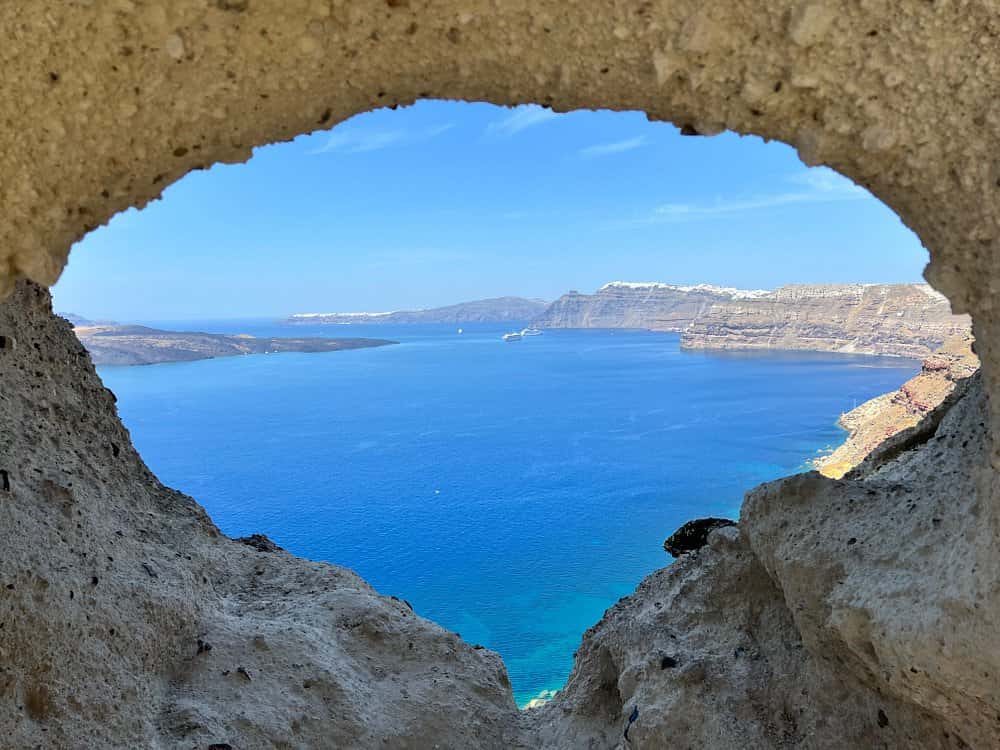
Distinctive turtle-shaped volcanic rock formation along the scenic hiking trail between Imerovigli and Oia, popular as a photo stop.
About Turtle Rock
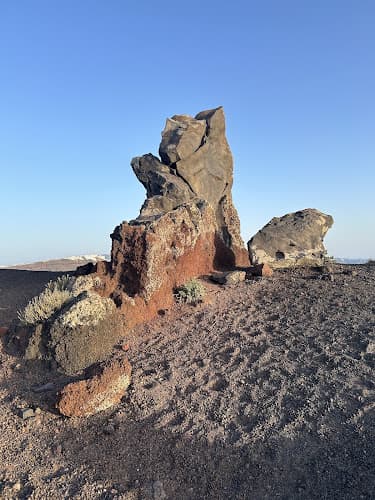
Turtle Rock is a small volcanic rock formation beside the Fira to Oia caldera trail in northern Santorini. From the right spot on the path, it looks like a turtle with its head raised. It is sometimes listed as Turtle Head Rock.
The rock is located on the rougher, quieter stretch of the hike between Imerovigli and Oia, near a chapel of the Blessed Virgin Mary and a small church of the Prophet Elias (Profitis Ilias). You can only reach it on foot, it costs nothing to see, and most hikers stop for a few minutes before carrying on toward Oia.
This guide explains where Turtle Rock is on the trail, how to get there from Fira or Oia, why it looks the way it does, what to bring for this exposed part of the hike, and which other rock formations on Santorini you can add to the same day.
Turtle Rock at a glance
| Detail | What to expect |
|---|---|
| What it is | A natural volcanic rock formation shaped like a turtle with an upturned head |
| Location | Beside the Fira to Oia trail, on the Imerovigli to Oia section, closer to Oia |
| Cost | Free. The trail is public and open year-round with no ticket |
| Time needed | A short photo stop, best planned as part of the hike |
| Access | On foot only, on a dirt and gravel path |
| Difficulty | Moderate. This section climbs and drops and has no shade |
| Best time to visit | Early morning, or late afternoon outside July and August |
| Facilities | None at the rock. Carry all the water you need |
Where is Turtle Rock in Santorini?
Turtle Rock has no sign, viewing platform or street address. Hikers on Tripadvisor describe it as sitting right next to the path between the chapel of the Blessed Virgin Mary and a small church of the Prophet Elias on the northern side of the caldera trail. One hiker’s report places it about 500 metres past the Virgin Mary chapel, heading from Fira toward Oia.
Online map pins for Turtle Rock do not always agree, so use the trail landmarks below instead of relying on one pin. Santorini also has several churches named after the Prophet Elias. The large Profitis Ilias Monastery on the island’s highest mountain, in the south near Pyrgos, is a different place from the small church on this trail.
Landmarks on the hike from Fira to Oia
- Start of the hike: walk north along the caldera from Fira through Firostefani to the village of Imerovigli, with the sea on your left.
- Leave Imerovigli past the Avalon Resort, where the village lanes merge into a single wider path.
- Climb past the Saint Mark chapel to the Church of Prophet Elias, a small white church with a blue dome at about 304 metres high, one of the highest points on the trail.
- Follow the painted “OIA” rock downhill. The paving ends here and the route becomes a dirt path of loose volcanic gravel.
- After a steep descent, the trail joins the main road near Aenaon Villas for about 400 metres, then leaves it at a signpost past a small snack shop.
- Climb toward the Chapel of the Assumption of the Virgin Mary, then watch the rocks beside the path as you continue toward Oia.
Walking out from Oia, reverse the route. Follow the caldera path southeast out of the village and uphill toward the Virgin Mary chapel, which is about 30 minutes’ walk from Oia.
Why the rock looks like a turtle
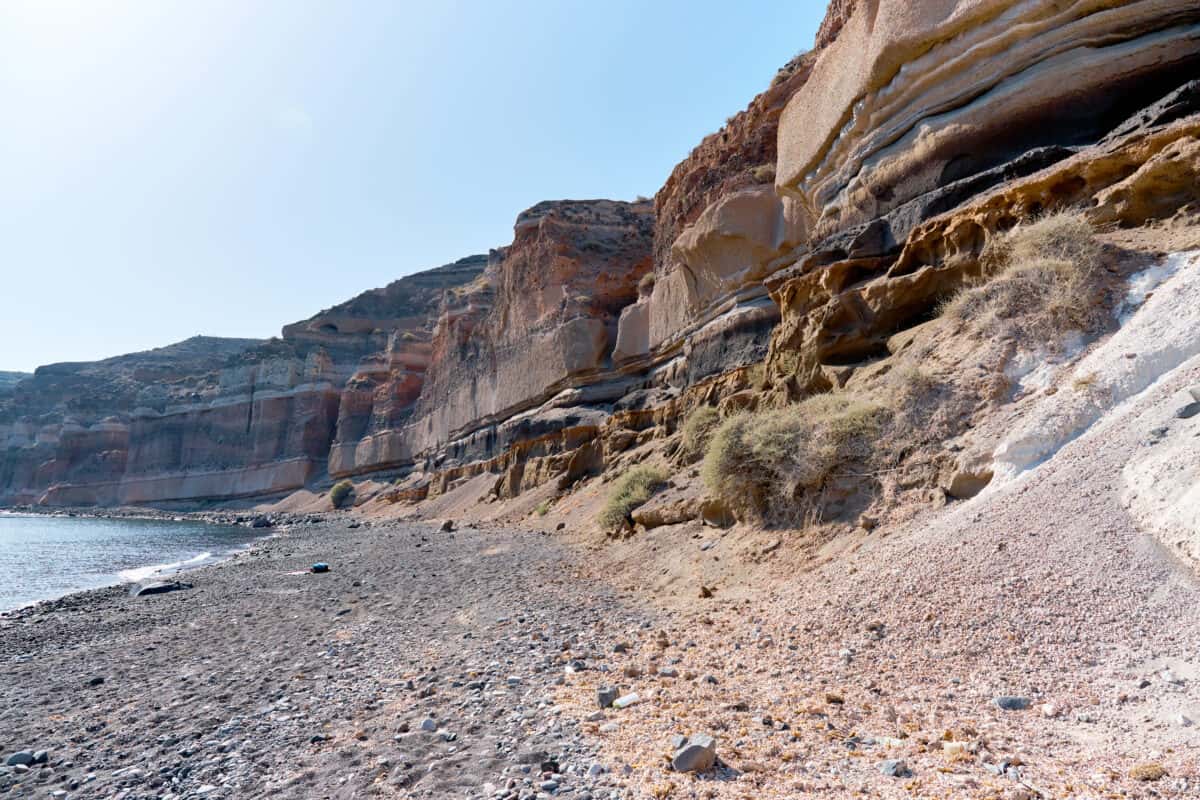
Turtle Rock is volcanic rock, not limestone. Northern Santorini, including the volcanic cliffs below the Imerovigli to Oia trail, is built mostly from lava flows. Many came from the Peristeria stratovolcano, which grew between about 530,000 and 430,000 years ago, and from later lavas that geologists call the andesites of Oia.
Santorini’s limestone is much older and lies elsewhere on the island. It belongs to the pre-volcanic basement of metamorphosed limestone and schist exposed at Profitis Ilias mountain, Mesa Vouno and a few other southern and central sites.
No published geological study describes Turtle Rock on its own. The simplest explanation for its shape is that weathering rounded an ordinary outcrop of lava or volcanic debris. The shell and raised head only line up from certain angles, which is why some visitors see the turtle straight away and others walk right past it. The cliffs you walk along are the inner wall of the caldera left by the Minoan eruption of around 1600 BC, and the black, red and pale bands in them are layers of lava and ash.
Is the Santorini volcano still active?
Yes. Santorini volcano is considered active but dormant. Its last eruption, in 1950, built a small lava dome on Nea Kameni, the dark island in the middle of the caldera that you can see from the trail. Scientists monitor the volcano continuously, and eruptions do not threaten day-to-day hiking on the caldera rim.
How to get to Turtle Rock
On the full Fira to Oia hike
Most people see Turtle Rock while walking the whole caldera trail. The route is about 10.5 km (6.5 miles) one way and takes around 2.5 to 5 hours, depending on your pace and stops. Walking from Fira to Oia gets the steepest climbing done early, keeps the morning sun behind you and saves Oia for the end. For distances, difficulty and other routes, see our guide to the best hikes in Santorini.
As a short walk from Oia
If you are staying in Oia or Finikia, walk out along the trail toward the Virgin Mary chapel and back. You will pass Turtle Rock and get some of the widest views of the caldera on the island without doing the whole hike. The path is uneven and climbs out of Oia, so wear proper shoes even for this shorter version. For more ideas nearby, see our list of things to do in Oia.
Getting back to Fira
The KTEL public bus between Oia and Fira takes about 25 to 30 minutes and costs roughly €2 to €2.20 one way. A taxi costs around €25, but taxis are hard to find after sunset in July and August. Buses fill up quickly after sunset, so if you time the hike for the Oia sunset, expect a wait or book a ride in advance. On cruise days, the trail and buses are busier from late morning. Our Oia or Fira comparison explains how the two villages differ.
Turtle Rock photo tips
- Shoot from the path. Visitor reviews say the turtle shape is clearest from the trail, so there is no reason to climb onto the rock or go toward the cliff edge.
- Take a few steps each way before you shoot, because the head and shell only line up from certain angles.
- Go early or late in the day. Low sun at sunrise or late afternoon brings out the texture of the volcanic rock, while midday light flattens it.
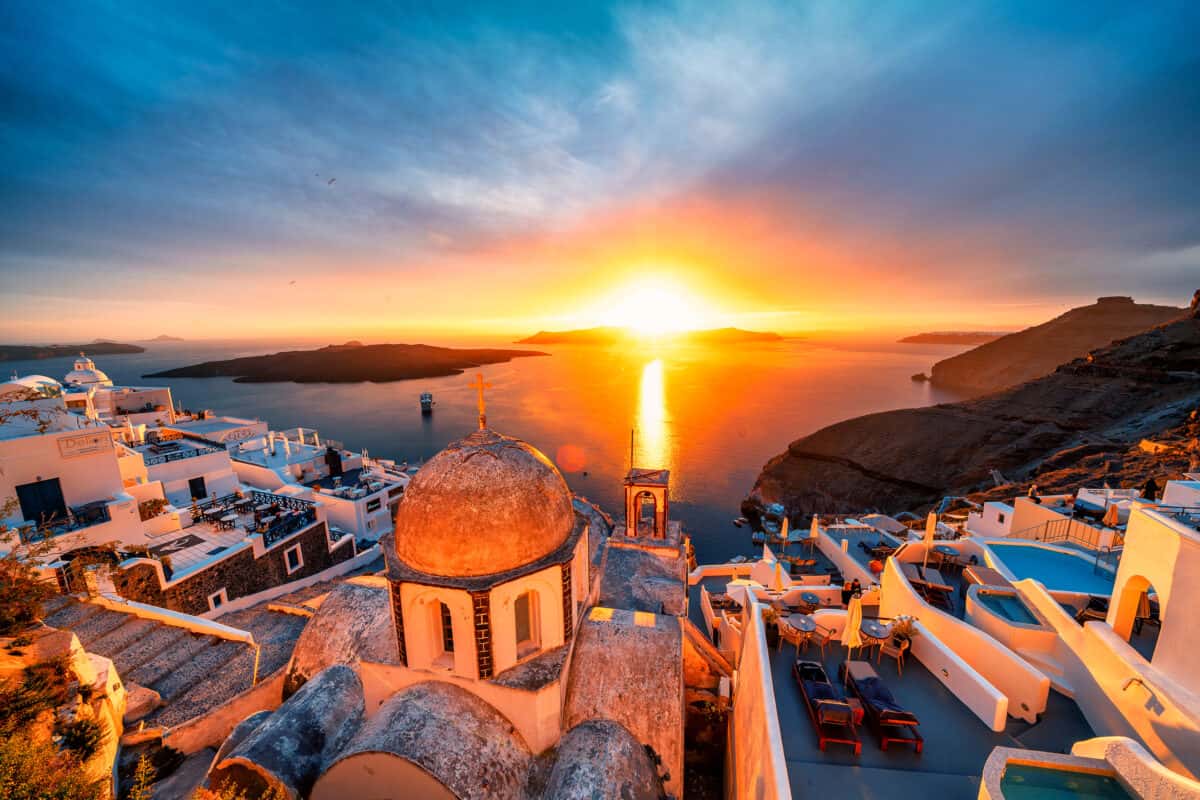
- Include the scenery. Framing the rock against the caldera, Thirasia or the Aegean Sea shows where the photo was taken.
What to bring and safety tips
The trail around Turtle Rock is the most remote part of the caldera walk. There is no shade and no reliable place to buy supplies between Imerovigli and Oia, so bring the following:
- At least 2 litres of water per person, plus snacks
- Walking shoes or trail runners with good grip, since loose gravel is slippery on the descents
- A hat, sunglasses and sunscreen
- Cash for the bus and any small café on the route
- An offline map, because Google Maps tends to send walkers along the inland road instead of the caldera path
- A headlamp if you might still be on the trail after sunset, since the northern section has no lighting
The best time to visit Turtle Rock is early in the day. From June to September, start from Fira by 7:00 AM. Late April to early June and mid-September to October are the most comfortable months for the hike. Stay on the marked path and keep back from the cliff edge, especially in strong wind.
Other rock formations in Santorini
Turtle Rock is one of several rocks on Santorini named for what they look like, or for what once stood on them. Two of them fit easily into a caldera day.
Skaros Rock and its history
Skaros Rock is the large rock promontory below Imerovigli, on the same trail as Turtle Rock. In the 13th century, Venetians built a fortress on top of it, known as La Roka or the Upper Castle, which was completed in 1207. Skaros later served as the island’s medieval capital before earthquakes and erosion destroyed most of the settlement.
Today the hike to Skaros Rock follows a marked path down from Imerovigli past the ruins, and the small chapel of Panagia Theoskepasti still sits on the cliffs below it. The detour adds roughly 1.5 to 2 hours to the Fira to Oia hike.
Indian Rock
Indian Rock, also called Indian Face Rock, is at the opposite end of the island, near the Akrotiri Lighthouse on the southwest tip. Some people see the profile of a face in it. Others say it resembles Spyridon Marinatos, the archaeologist who excavated the prehistoric site of Akrotiri. It is easiest to see from the water on a boat trip around the caldera.
Nearby stops on the same walk
- Chapel of the Assumption of the Virgin Mary: a small chapel with a peach-coloured wall. A short path behind its yellow side building leads up to one of the best viewpoints on this part of the trail.
- Church of Prophet Elias: a white chapel with a blue dome at about 304 metres, and the last shaded rest stop before the rough section.
- Oia Castle: the remains of a Venetian lookout at the tip of Oia and the island’s best-known sunset spot. Check our Santorini sunset times before you plan an evening finish.
- Domaine Sigalas: a winery in Baxedes, just outside Oia, where you can taste local Assyrtiko wine after the hike.
Planning the rest of your trip? Start with our Santorini travel guide.
Frequently asked questions
Is Turtle Rock in Santorini worth visiting?
On its own it is a short photo stop. It is best enjoyed as one landmark on the Imerovigli to Oia section of the Fira to Oia hike, along with the trail chapels and caldera views.
Is there an entrance fee for Turtle Rock?
No. Turtle Rock sits beside the public Fira to Oia caldera trail, which is free and open year-round with no ticket or reservation.
Is Turtle Rock safe to visit?
Yes, if you stay on the marked path. Keep back from the cliff edge, avoid climbing on the rock, wear shoes with grip and carry enough water, as this section has no shade.
Can you drive to Turtle Rock?
Plan to reach it on foot. It is a trailside rock on the caldera path, reached on the full hike from Fira or on a shorter out-and-back walk from Oia.
Is Turtle Rock made of limestone?
No. Northern Santorini is built mainly from volcanic lava flows. The island’s limestone is an older pre-volcanic basement exposed around Profitis Ilias mountain and Mesa Vouno in the south.
Why can’t some people see the turtle shape?
The resemblance depends on your angle. Walk a few steps back and forth along the path until the head and shell line up.
Reviews
Loading traveler reality-check data for Turtle Rock.
Amenities & Features
- Tourist Attraction