Perissa
Seaside coastal village in southeast Santorini known for its Blue Flag black-sand beach, beachfront tavernas, and hiking trails to Ancient Thera.
About Perissa
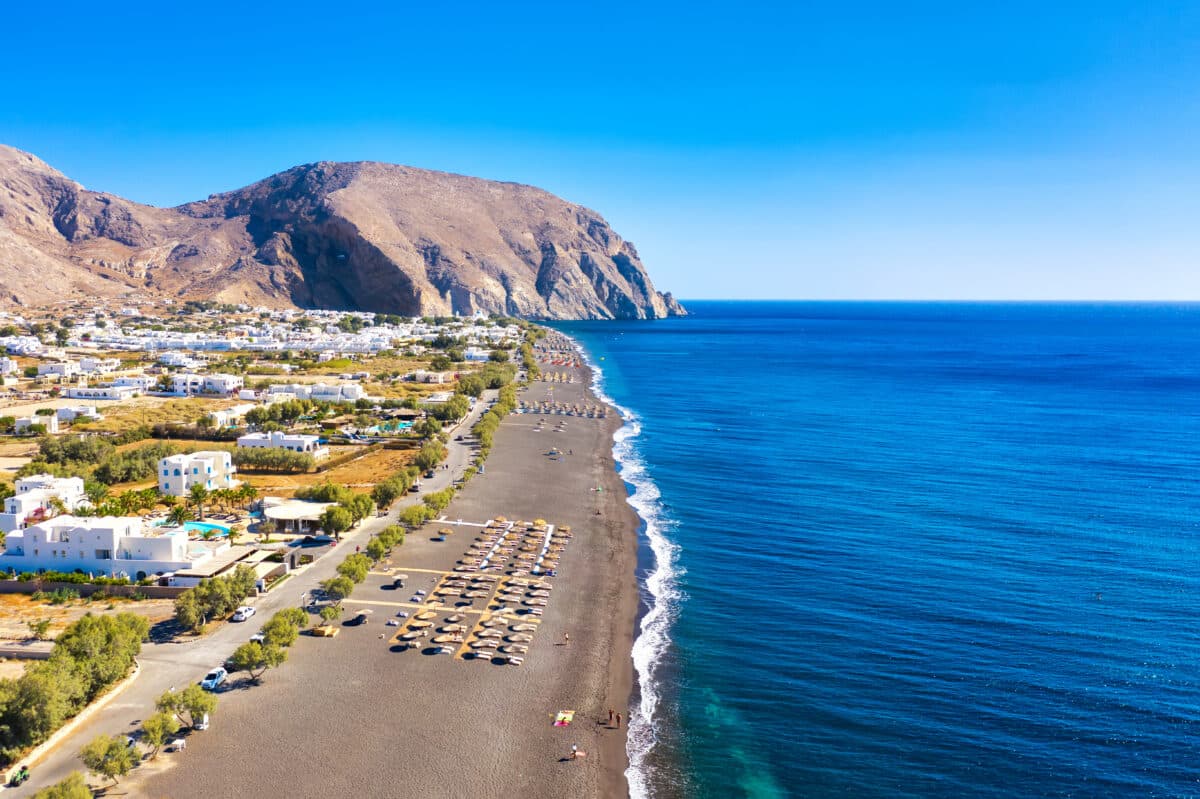
Perissa is a beach village on the southeastern coast of Santorini, Greece, about 13 km southeast of Fira. It’s built along one of the island’s longest black sand beaches, at the base of Mesa Vouno mountain. Compared with the caldera towns, Perissa has a relaxed atmosphere, with seafront tavernas, beach bars, water sports and diving centers, plus lower hotel prices than Oia, Fira or Imerovigli. It’s also where the footpath up to the archaeological site of Ancient Thera begins.

Most visitors come for the beach, but the village is worth more of your time than a quick swim. You can climb to a 16th-century cave chapel, walk over the mountain to Kamari, take a small boat around the headland, or use Perissa as a good-value base for exploring the rest of the island. This guide covers what the village is like, how to get there, what to do, where to eat and where to stay. For sunbeds, beach clubs and swimming conditions in more detail, see our separate Perissa Beach guide.
Perissa at a glance
| Detail | What to know |
|---|---|
| Location | Southeastern coast of Santorini, Greece, at the southern foot of Mesa Vouno, about 13 km southeast of Fira |
| Beach | Long black sand beach of volcanic sand, organized with sunbeds and umbrellas, Blue Flag listed |
| Neighboring beaches | Perivolos and Agios Georgios to the south; Kamari on the other side of Mesa Vouno |
| Bus from Fira | KTEL line to Perissa/Perivolos, €2.70 one way (2026 fare table) |
| Main sights | Church of the Holy Cross, Panagia Katefiani chapel, Ancient Thera ruins |
| Best for | Beach holidays, families, budget-conscious travelers, hikers |
| Not ideal for | Caldera views and caldera sunsets |
| Village feast | 14 September (Exaltation of the Holy Cross) |
Where Perissa is and what it’s like
Perissa lies on the flat eastern side of the island, away from the cliffs of the caldera. Mesa Vouno, the rocky mountain next to Profitis Ilias that holds the ruins of Ancient Thera, rises straight up at the northern end of the village and separates Perissa from Kamari. Walk south along the beach and the village runs into Perivolos, then Agios Georgios, with the same black sand the whole way. Perissa and Perivolos together cover about 4 km of shoreline, and some guides count up to 7 km once you include Agios Georgios.
The village itself is low-rise and spread out: a strip of beachfront restaurants, cafes and bars, small hotels and studios in the streets behind the beach, and mini-markets, bakeries and car-hire offices along the main road. Whitewashed Cycladic houses are scattered around, but Perissa is mainly a resort village with a newer feel than historic settlements like Pyrgos or Oia. It suits beach time and practical stays better than sightseeing strolls.
Because the village faces the open Aegean Sea rather than the caldera, you won’t get the famous Oia sunset view here. Early risers get a sunrise over the water instead, and the caldera towns are about half an hour away by car or bus when you want the classic Santorini evening.
Perissa Beach: what to expect
Perissa Beach in Santorini is the main reason most people visit Perissa. The sand is black volcanic sand, the blue waters are crystal clear, and the beach areas in front of the village are fully organized with sun loungers, umbrellas, showers and beach bars. The Municipal Port Fund of Thira describes Perissa as a Blue Flag beach with food, drink and water sports on offer, and it continues straight into Perivolos Beach to the south.

Some things are good to know before visiting Perissa Beach:
- Black sand heats up fast in summer. Bring beach shoes or sandals and use the wooden walkways where they’re in place.
- Sunbeds in front of beach bars usually come with a minimum spend or a daily set price. Each bar sets its own rules, so ask before you sit down.
- Free sections of sand remain between the organized areas if you’d rather bring your own towel and umbrella and sunbathe for free.
- The northern end of the beach, under the cliffs of Mesa Vouno, is usually the most sheltered and the most scenic part of the bay.
- Wind can pick up in July and August, when the meltemi blows across the Cyclades. On calm mornings the sea is at its clearest.
If you’d like a livelier day with music, swimming pools and table service, Perivolos has more of the island’s beach clubs. Our list of the best Santorini beach clubs covers the options along this stretch, and our guide to the best beaches in Santorini compares Perissa with Kamari Beach, Red Beach, Vlychada and others.
Things to do in Perissa
Hike to Ancient Thera
The ruins of Ancient Thera sit on the ridge of Mesa Vouno, between Perissa and Kamari. A marked trail climbs from the Perissa side of the mountain up to the Sellada saddle and on to the site, and you can continue down the other side to Kamari to make it a one-way walk. The path is steep and exposed, with almost no shade, so start early in the morning, wear proper shoes and carry plenty of water.
Check the opening hours before you set off. In summer 2026 (1 April to 31 October), Ancient Thera is listed as open 08:30 to 15:30 and closed on Wednesdays, with full admission at €10 and reduced admission at €5. The Ephorate of Antiquities of the Cyclades publishes the current schedule, and hours can change at short notice. Our best hikes in Santorini guide has more on the trail and how to get back.
Climb to the Panagia Katefiani chapel
If you’d like the view without the full hike, take the side path to Panagia Katefiani, a small chapel built into a cave in the rock face of Mesa Vouno. It’s about a 20 to 30 minute climb from the village. The chapel was built between 1537 and 1650, and its name comes from the Greek word katafygio, meaning refuge, because local people hid here during pirate raids. From the chapel you can see down over the whole black sand coastline to Perivolos.
Visit the Church of the Holy Cross
The Church of the Holy Cross (Timios Stavros) stands in Perissa’s central square, close to the beach, and is one of the largest churches on Santorini. The first church was built between 1835 and 1840, badly damaged in the 1956 earthquake, and then rebuilt. The biggest day of the year here is the feast of the Exaltation of the Holy Cross on 14 September, when the village holds its religious festival. Dress modestly if you go inside, with shoulders and knees covered.
See the remains of the Agia Irini basilica
Near the Church of the Holy Cross are the remains of an early Christian basilica dedicated to Saint Irene (Agia Irini). It’s a small site, but it has a place in the island’s story, since Saint Irene is the saint the name Santorini is traditionally linked to. It fits easily into a walk around the village center.
Take the water taxi to Kamari
Perissa and Kamari are close on the map, but Mesa Vouno sits between them and the road around it is about 14 km. In summer, a small water taxi goes around the headland in roughly 15 minutes. Departures are weather-dependent and usually run through the day, and recent reports put the fare at about €8 per person, usually paid in cash. It’s a good way to spend an afternoon on Kamari‘s promenade and come back by bus. If you’re hiking to Ancient Thera, the boat also makes a handy return trip.
Try water sports and scuba diving
The Perissa and Perivolos seafront has water sports stations for activities like jet skis, paddleboards and towed rides, and several diving centers work from Perissa Beach, including Santorini Dive Center and the Mediterranean Diving Club. Beginner try-dives and certification courses are both widely available. Book with an operator that’s clear about safety briefings, equipment and weather policy, and confirm the price before you go out.
Use Perissa as a base for day trips
Perissa is well placed for the south of the island. Pyrgos, the wineries around Megalochori and Santo Winery, the Akrotiri archaeological site and the boat trips to Red Beach and White Beach are all easily accessible by car. Many caldera cruise and catamaran tours, which usually stop at the volcano and the hot springs, offer hotel pick-up from the beach villages. Our list of things to do in Santorini has more ideas.
Where to eat and nightlife in Perissa
Most of Perissa’s restaurants and tavernas sit along the beachfront, so you can eat with the sea in view. Fish tavernas are the local specialty. Fratzeskos Fish Tavern is a long-running spot right on the Perissa waterfront that gets much of its fish from its own fishing boat, and Apollon is another busy seafront fish tavern serving grilled fish and Greek classics. Look for Santorini dishes like fava (yellow split pea puree) and tomatokeftedes (tomato fritters) on menus.
Nightlife in Perissa is laid-back. Tranquilo, a colorful beach bar on the Perissa beachfront, is known for cocktails, vegetarian and vegan food, and evenings with live music and dancing. For beach lounges and DJ sets, walk south to Perivolos, where places like Demilmar sit on the black sand. For clubs that stay open late, head to Fira, and check how you’ll get back before you go.
How to get to Perissa
Perissa is easy to reach by public bus from Fira, which is the island’s transport hub. KTEL runs the Fira to Perissa/Perivolos line, and the 2026 fare table lists the one-way ticket at €2.70. You pay on board or at the Fira bus station. Timetables change with the season, so check the latest times on our Santorini bus schedule page or the official KTEL Santorini website before you plan a late return.
| From | Best option | What to know |
|---|---|---|
| Fira | KTEL bus | €2.70 one way; direct line to Perissa and Perivolos |
| Santorini airport (JTR) | Taxi, pre-booked transfer or rental car | Roughly 13 to 14 km by road; no direct bus, so bus travelers change in Fira |
| Athinios ferry port | Pre-booked transfer, taxi or rental car | Roughly 11 to 13 km by road; port buses mostly run to Fira and are timed to ferry arrivals |
| Kamari | Water taxi in summer, bus via Fira, or car | Boat takes about 15 minutes; the road trip is about 14 km |
| Oia | Bus via Fira or car | Allow extra time in peak season, as you’ll change buses in Fira |
Taxis are limited on Santorini in high season, so book airport and port transfers in advance, especially for late-night ferries. Renting a car or ATV gives you the most flexibility for exploring the south of the island. Our guide to getting around Santorini compares buses, taxis, rental cars and ATVs.
Perissa vs Kamari vs the caldera villages
Deciding between Perissa and Kamari is one of the most common questions when choosing a beach base on Santorini. Both are black sand resort villages on the east coast, but the details differ.
| Factor | Perissa | Kamari | Fira, Oia and Imerovigli |
|---|---|---|---|
| Beach | Long black sand beach running into Perivolos | Black sand and pebble beach with a paved promenade | No swimming beach in the village |
| Atmosphere | Relaxed, spread out, beach bars along the sand | More compact resort town with a busy promenade | Busy, scenic, focused on views and sunsets |
| Caldera views | No | No | Yes |
| Hotel prices | Generally lower | Generally lower | Generally highest on the island |
| Distance to airport | Farther | Closer | Varies |
| Walking access | Flat along the beach | Flat along the promenade | Steps and slopes |
| Beach clubs | Nearby in Perivolos | Along the promenade | Not applicable |
Choose Perissa if you want a longer beach, easy access to the beach clubs of Perivolos and a quieter base. Choose Kamari if a walkable promenade and a shorter airport transfer matter more. Staying on the caldera suits travelers whose priority is the view rather than swimming. Our guide to where to stay in Santorini compares every area in more detail.
Where to stay in Perissa
Accommodation in Perissa is mostly small hotels, studios and family-run guesthouses within walking distance of the beach, along with a few resort-style properties with swimming pools. Prices are usually well below those in the caldera villages, which makes a hotel in Perissa one of the better-value options on the island. Families also do well here, because the village is flat, the beach is long and there’s plenty to eat nearby.
- For our shortlist of the best hotels in Perissa, see Perissa hotels.
- For a 3-star option with a pool, close to both Perissa and Perivolos, see our Perissa Bay Hotel review.
- For beachfront stays across the island, see the best beach hotels in Santorini.
- On a tight budget, start with the best cheap hotels in Santorini.
- Traveling with children? See the best family hotels in Santorini.
Best time to visit Perissa
The beach season runs from about May to October. June to September brings the warmest sea and the fullest range of open beach bars, water sports and boat services. July and August are the busiest and hottest months, and also the windiest. Late May, June and September are good compromises, with warm water and more space on the sand. From November to March, many hotels, tavernas and beach businesses in Perissa close or reduce their hours. For month-by-month detail, see our guide to the best time to visit Santorini.
If you’re around in mid-September, the 14 September feast at the Church of the Holy Cross is the village’s main celebration.
Practical tips for visiting Perissa
- Carry some cash for the water taxi, small tavernas and sunbed charges, even though most places take cards.
- Do the Mesa Vouno climbs in the early morning. By midday in summer, the trail is hot and fully exposed.
- Ancient Thera is closed on Wednesdays in the 2026 summer schedule, so plan your hike for another day.
- Check the last bus back to Fira before a night out on the caldera, and pre-book a taxi if you’ll be later than that.
- Use reef-safe sunscreen and take any rubbish with you, especially on the free sections of beach.
- In an emergency, dial 112, the EU-wide emergency number, which works in Greece.
Frequently asked questions
Is Perissa worth visiting?
Yes, if you want a beach day or a relaxed beach base. Perissa has a long, organized black sand beach, a Blue Flag listing, plenty of tavernas and the trail up to Ancient Thera. It isn’t the place for caldera views, so pair it with an evening in Oia, Fira or Imerovigli.
Why is the sand at Perissa black?
Santorini is a volcanic island, and the dark sand along Perissa, Perivolos and Kamari comes from volcanic rock that has been broken down over time. It absorbs heat quickly, so bring sandals in summer.
Is Perissa expensive?
Perissa is generally one of the more affordable places to stay and eat on Santorini. Hotels usually cost less than in Oia, Fira or Imerovigli, and the bus to Fira costs €2.70 one way. Sunbeds at beach bars often come with a set price or minimum spend.
Is Perissa good for families?
Yes. The village is flat, the beach is long and organized, and there are restaurants, mini-markets and hotels within walking distance of the sand. Watch children closely on hot black sand and on windy days.
Can you see the sunset from Perissa?
Not the famous caldera sunset. Perissa faces the open Aegean on the southeast coast, so it’s better for sunrise. For sunset over the caldera, head to Oia, Fira or Imerovigli.
Reviews
Loading traveler reality-check data for Perissa.
Amenities & Features
- Tourist Attraction