Megaro Gizi
A small history museum in an 18th-century Venetian mansion in Fira’s Catholic quarter. It shows engravings, Catholic Diocese archives, paintings and photographs of Santorini before and after the 1956 earthquake. Open May to October.
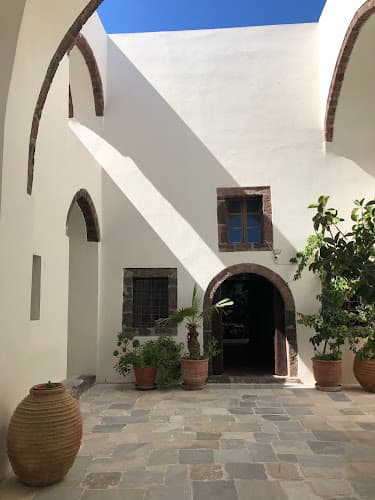
About Megaro Gizi
Megaro Gizi (also spelled Megaro Gyzi or Gyzi Megaron) is a small history museum and cultural center in an 18th-century Venetian mansion in the Catholic quarter of Fira. Its collections trace Santorini’s public and private life from the Venetian period to the 1956 earthquake, drawing largely on the archives of the Catholic Diocese of Thira. The museum is open from 1 May to 31 October, Monday to Saturday, 10:00-16:00, and a standard ticket costs €3.

This is a different kind of stop from Akrotiri or the Museum of Prehistoric Thera. Instead of Bronze Age finds, you get maps, engravings, handwritten records, paintings and photographs that explain the island’s later history: its Venetian lords, its Catholic community, and the earthquake that destroyed much of Fira in 1956. The rooms are indoors and compact, which makes the museum a good break on a hot or windy day in town.
What you see inside
The museum’s halls hold six permanent collections, according to the Cyclades Chamber of Commerce’s e-Kyklades listing:
- Original engravings of maps, landscapes and traditional costumes of Santorini and other Aegean islands, dating from the 15th to the 19th century
- Historical documents from the records of the Catholic Diocese of Santorini, covering public and private life on the island from the late 16th to the early 19th century
- Paintings donated by Kalliopi and Leontos Pintou
- Old photographs of Santorini, including images of Fira before and after the 1956 earthquake
- A collection of rocks from Santorini
- Folk and ethnographic objects from the donated collection of Niko and Konstantinia Tsitsa
The earthquake photographs are useful context for any walk through town. Much of the Fira you see today was rebuilt after 1956, and the black-and-white images show what stood on the caldera edge before. The cultural center also stages temporary exhibitions of painting, photography and folk art, so what is on display beyond the permanent collections changes from season to season.
The mansion and its history
The building belonged to the Gyzi family, a Venetian family of Santorini. The museum’s official site dates the mansion to the 18th century, although some visitor guides describe it as 17th-century. It is one of the very few old aristocratic buildings in Fira to survive the 1956 earthquake, but it then fell into decay. In the late 1970s the Catholic Diocese of Thira restored it and gave it to a new cultural center, which has run the museum and a year-round program of concerts, talks and exhibitions ever since.
The Catholic connection explains the collection. After 1207, Santorini became part of the Venetian-ruled Duchy of the Archipelago, and Venetian rule lasted until the Ottomans took the island in the late 16th century. That period left the island with one of the longest-standing Catholic communities in the Aegean. The diocese’s archives supply many of the documents on display, and the Catholic Cathedral of St John the Baptist stands a few steps from the museum entrance.
Opening hours, tickets and contact
| Detail | Official information |
|---|---|
| Season | 1 May to 31 October |
| Museum hours | Monday to Saturday, 10:00-16:00 |
| Sunday | Not included in the official museum hours |
| Standard ticket | €3.00 |
| Students | €1.50 |
| Children under 10 | Free |
| Phone | +30 22860 23077 |
| Location | Catholic quarter of Fira, beside the Catholic Cathedral on Erythrou Stavrou |
| Website | gyzimegaron.gr |
These hours and prices come from the museum’s own website. Some third-party listings show different times, including later summer closing, so call ahead if you plan to arrive in the afternoon. Concerts and events can also affect access to the halls. The museum is closed from November to April, but the cultural center holds events at other times of year, so winter visitors should check its website for the current program.
The Megaro Gyzi Festival
Every August the cultural center hosts the Megaro Gyzi Festival, one of Santorini’s longest-running cultural events. The 2026 edition was its 40th and ran from 3 to 13 August, with four music evenings on 3, 6, 10 and 13 August featuring Greek and international performers. Admission to all festival events is free, funded by the Catholic Diocese of Thira. Performances take place inside the mansion, including an old traditional winery whose stone walls also serve as exhibition space. If you will be on the island in August, check the official site for next year’s program.
How to fit it into a Fira day
Because the museum closes at 16:00 on its official schedule, visit in the morning or early afternoon and save the caldera path for later in the day. The Catholic Cathedral next door is an easy add-on. For the older chapter of the island’s story, pair Megaro Gizi with the Museum of Prehistoric Thera, also in Fira, and with the excavations covered in our Akrotiri prehistoric city guide. The Museum of Prehistoric Thera is closed on Tuesdays, so Megaro Gizi is a good history stop in town that day.
If you want to walk to museums, restaurants and the bus station, our guide to the best hotels in Fira covers places to stay within walking distance. For the rest of your itinerary, see our list of the best things to do in Santorini.
Local tip: Treat Megaro Gizi as a short, low-cost stop on a Fira walking day. It shows the Santorini of Venetian families, church archives and the 1956 rebuild, which most visitors never see between the caldera viewpoints and the shops.
Frequently asked questions
Is Megaro Gizi the same as Gyzi Megaron?
Yes. Megaro Gizi, Megaro Gyzi, Gyzi Megaron and Gyzi Mansion are all transliterations of the same Greek name, Μέγαρο Γκύζη, for the museum and cultural center in Fira.
Do I need a separate ticket for Megaro Gizi?
Yes. Megaro Gizi is run by a cultural center founded by the Catholic Diocese of Thira, and its official site lists its own ticket: €3 standard, €1.50 for students, and free for children under 10.
Is Megaro Gizi worth visiting with children?
It suits older children who are interested in old maps, photographs or the story of the 1956 earthquake. Entry is free for children under 10, so a short visit costs little if younger kids lose interest.
Can I visit Megaro Gizi in winter?
The museum is open only from 1 May to 31 October. The cultural center holds events at other times of year, so check its website for any winter program.
Reviews
Loading traveler reality-check data for Megaro Gizi.
Amenities & Features
- Cultural Experience
- Indoor Activity