Museum of Prehistoric Thera
Central Fira archaeological museum displaying ancient wall frescoes, painted pottery, and Bronze Age artifacts excavated from Akrotiri.
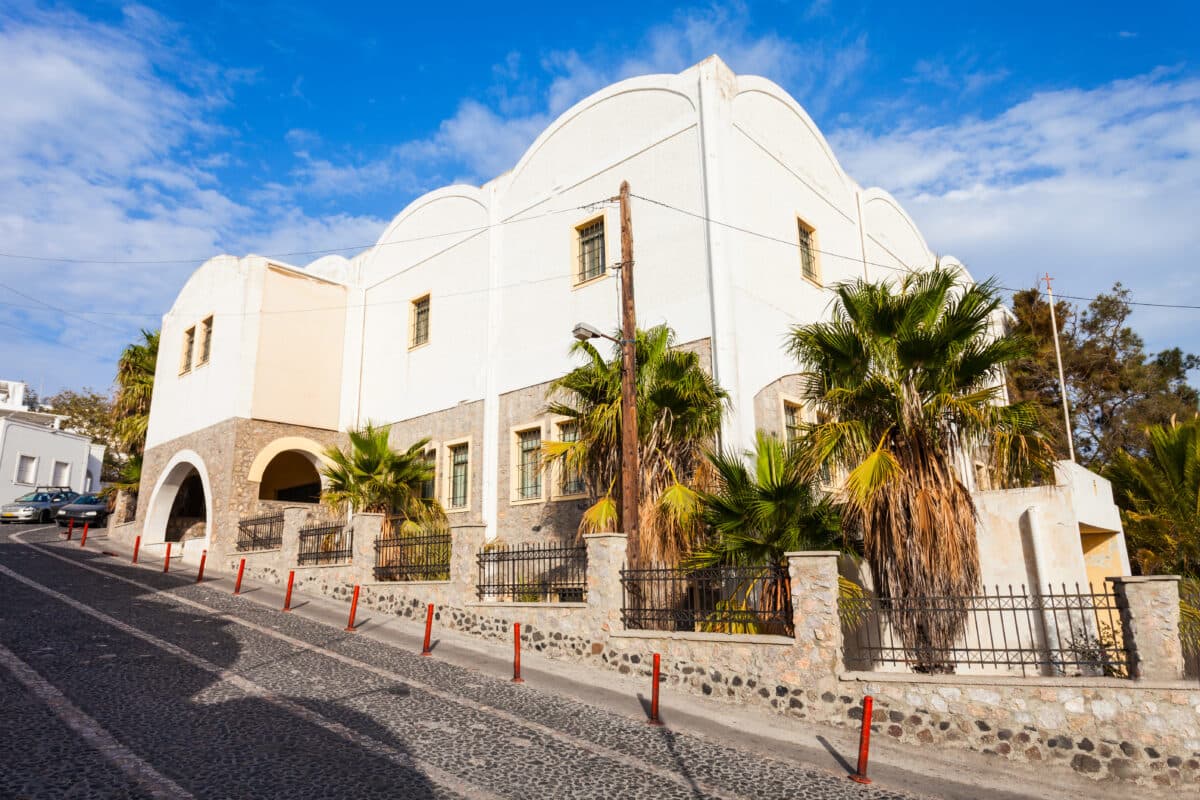
About Museum of Prehistoric Thera
The Museum of Prehistoric Thera in Fira holds the most important finds from Akrotiri Prehistoric City, the Bronze Age town buried by Santorini’s volcanic eruption. Inside you will find original Akrotiri wall paintings, a gold ibex figurine discovered in 1999, Linear A tablets, and pottery painted with swallows. The museum is open 08:30–15:30 every day except Tuesday, and a standard ticket costs €10.
The excavation site shows you the streets and buildings of Akrotiri. The museum shows you what people kept inside them. It covers the island’s geology, its settlement history from the Late Neolithic onward, and the height of Akrotiri in the 17th century BC, so the visit follows a clear timeline. If you only have time for one history stop in town, choose this one. It fits easily into a broader Santorini itinerary.

Museum of Prehistoric Thera at a glance
| Location | Fira, Thira 84700, across from the Fira bus station and near the Orthodox Metropolitan Cathedral |
| Opening hours | 08:30–15:30 daily, closed Tuesday (winter and summer) |
| Last entry | 20 minutes before closing (15:10) |
| Tickets | €10 standard, €5 reduced; e-tickets available |
| Free entry | EU citizens under 25 and non-EU visitors under 18 with ID, plus set free-admission days |
| Time needed | About 1–2 hours |
| Accessibility | Ramp, lift and accessible WC listed by the Ministry of Culture |
| Contact | +30 22860 25405, [email protected] |
| Operated by | Ephorate of Antiquities of the Cyclades, Hellenic Ministry of Culture |
Details from the official Ministry of Culture and Ephorate of Antiquities of the Cyclades listings, checked September 2026.
What to see inside
The museum has two complementary exhibitions on two floors. The main exhibition opened in 2000 and traces prehistoric Thera from its earliest settlement to the destruction of Akrotiri. The second, opened in 2021, is devoted to the wall paintings and presents them as full room compositions rather than as isolated pieces.
The main exhibition: from geology to Akrotiri’s peak
Your visit begins with four sections: the history of archaeological research on Thera, the island’s geology, the story of Thera from the Late Neolithic (mid-5th millennium BC) to the mid-17th century BC, and finally the height of Akrotiri. That last period ended when the eruption buried the city, probably at the end of the 17th century BC. The geology section includes plant fossils from before people lived on the island. It helps explain the landscape you see from the caldera edge outside.
The earlier galleries hold Neolithic and Early Cycladic pottery, Early Cycladic marble figurines, stone tools, and early bronzework from sites across Santorini and the Christiana islets. The Akrotiri section then covers how the town was planned, how goods were recorded and measured, its jewelry, its imported pottery, and its trading contacts across the Aegean.
Objects not to miss
- The gold ibex figurine: found in December 1999 during foundation work for the site’s new shelter. It was lying in a clay chest beside a pile of goat horns and is one of the museum’s best-known pieces.
- The Monkeys, Women and Papyrus wall paintings: fresco ensembles shown in the main exhibition, along with fragments of more paintings.
- Bird jugs decorated with swallows: Middle Cycladic pottery from Ftellos, Megalochori and Akrotiri, dated to the 20th–18th centuries BC.
- Plaster casts of furniture: rare evidence of the everyday furnishings in Akrotiri homes, shown with household items, bronze vessels and tools.
- Linear A tablets and seals: evidence of how Akrotiri recorded and managed goods, shown next to standardized storage vessels.
The wall-painting galleries
The exhibition Thera Wall Paintings: The Masterpieces of the Aegean Prehistory opened on the upper floor in August 2021. It presents a further 28 wall paintings from Akrotiri. Each group is arranged in the positions it originally held on the walls. Two sets are displayed for comparison: the full program from rooms 4 and 5 of the West House, a private building, and part of the program from Xeste 3, a public building. Look for the Fishermen, the Priestess, the Miniature Frieze, the Ikria, the Saffron Gatherers and the Goddess of Nature. A separate section explains how conservators rebuild the paintings from the thousands of fragments found on site.
The wall paintings leave the strongest impression on many visitors, particularly if they have already walked through the excavated streets. They show the people who lived at Akrotiri fishing, gathering saffron and worshipping.

Opening hours and tickets
According to the Ephorate of Antiquities of the Cyclades and the Ministry of Culture’s museum listing, the museum is open 08:30–15:30 in both summer (1 April–31 October) and winter (1 November–31 March). It closes every Tuesday. The last entry is 20 minutes before closing. A standard ticket costs €10 and a reduced ticket costs €5. The official listing also offers e-tickets.
Free and reduced admission
- Free for EU citizens up to age 25 and for non-EU visitors up to age 18, with an ID card or passport
- Free for people with disabilities, plus one escort for those with a 67% disability rating, with supporting documents
- Reduced (50%) for Greek and EU citizens over 65 from 1 October to 31 May
- Free for everyone on 6 March, 18 April, 18 May, 28 October, and the last weekend of September (European Heritage Days)
- Free on winter Sundays between 1 November and 31 March. The museum listing names the first Sunday of each month, and the Ministry’s general admission page names the first and third Sundays, so confirm before you go.
Greek state museums close on 1 January, 25 March, Orthodox Easter Sunday, 1 May, and 25–26 December. Hours can also change on Good Friday and Holy Saturday. Call the museum on +30 22860 25405 if your visit falls near a holiday. Some older guides still list +30 22860 23217, but the official listings now give 25405.
The Ephorate’s visitor rules ban eating, swimwear, pets other than assistance dogs, and professional photography or filming without a permit.
How to plan your visit
The museum is in the center of Fira, across the road from the bus station, so it is easy to combine with lunch, shopping or a caldera walk. It also suits travelers without a car, since Fira is the island’s main transport hub. KTEL buses run between Fira and Akrotiri for €2.20, and the ride takes about 20–25 minutes.
Pairing it with Akrotiri
The best pairing is with the Akrotiri excavation site. Visit the site first if you want to see the layout of the town before its contents. Start at the museum if you would rather understand the finds before walking the streets. Either order works, but check the two schedules carefully:
- The museum is closed on Tuesday, but the Akrotiri site is open that day.
- On Mondays and Thursdays, Akrotiri also closes at 15:30, so a same-day visit to both is tight.
- On Wednesday, Friday, Saturday and Sunday, Akrotiri stays open later (until 19:00 from 16–30 September, for example), which makes it easy to see the museum in the morning and the site in the afternoon.
- Akrotiri has its own ticket (€20 standard, €10 reduced). The two sites do not share a ticket.
Example day: on a Wednesday in late September, you could arrive at the museum at 08:30 and spend about 90 minutes inside. After lunch in Fira, take an early-afternoon bus to Akrotiri and tour the site before it closes at 19:00. Check the current bus board at Fira before you set off, because KTEL changes its timetable during the season.
Who it suits best
This museum suits travelers interested in archaeology, Greek history or prehistoric art, and anyone who wants a quieter indoor stop away from the beach crowds. Families with older children and history-focused couples tend to enjoy it. It is also a good choice in the shoulder season, on windy days, or in the hottest part of a summer morning, because the visit is indoors and short.
Local tip: If your time on Santorini is short, combine the museum with sightseeing in Fira and continue the archaeology theme at Akrotiri. Each one explains the other: the site shows where people lived, and the museum shows what they made.
Frequently asked questions
Is the Museum of Prehistoric Thera the same as the Archaeological Museum of Thera?
No. Both are in Fira, but they are separate museums with separate tickets. The Museum of Prehistoric Thera focuses on the Bronze Age and Akrotiri. The Archaeological Museum of Thera covers later periods, closes on Monday rather than Tuesday, and stays open until 21:00 on Saturdays.
Are the original Akrotiri frescoes at the excavation site?
No. The original wall paintings have been moved from the site for protection. On Santorini, the Museum of Prehistoric Thera in Fira is the place to see them. Some Akrotiri paintings have also been displayed at the National Archaeological Museum in Athens.
Do I need to book tickets in advance?
The official sources reviewed do not say that advance booking is required. The Ministry of Culture listing offers e-tickets if you want to buy ahead.
Is the museum wheelchair accessible?
The Ministry of Culture lists a ramp, a lift and an accessible WC. Call +30 22860 25405 before your visit if you need specific assistance.
Reviews
Loading traveler reality-check data for Museum of Prehistoric Thera.
Amenities & Features
- Cultural Experience
- Indoor Activity