Houses of Plaka
Charming 19th-century neoclassical townhouses and Cycladic-style dwellings situated along pedestrian alleys beneath the Athens Acropolis.

About Houses of Plaka
The houses of Plaka include the oldest surviving homes in Athens, packed onto the north and east slopes of the Acropolis. In one short walk you pass an Ottoman-era mansion from the 16th to 18th centuries, 19th-century Athenian popular houses, pastel neoclassical townhouses with marble balconies, and the whitewashed island cottages of Anafiotika. Several are open as small museums, and about half of all buildings in the district are protected by a preservation order.
This guide focuses on the architecture: what to look for, which houses you can go inside and how the neighbourhood was saved. For shops, restaurants and general sightseeing, see our full guide to Plaka in Athens.
Houses of Plaka at a glance
| House type | Period | Where to see it | Can you go in? |
|---|---|---|---|
| Ottoman-era mansion (konak) | Oldest parts 16th century, mostly first half of the 18th century | Benizelos Mansion, 96 Adrianou Street | Yes, museum with limited opening days |
| Athenian popular house | Late 18th and 19th centuries | Lanes around the Roman Agora and Mnisikleous Street | Mostly private homes |
| Neoclassical townhouse and mansion | 1830s to about 1940 | Lassanis Mansion (1-3 Diogenous), Michaleas Mansion (12 Theorias), streets around Adrianou and Kydathineon | Yes, several are museums |
| Cycladic island house | 1840s onward | Anafiotika, below the Acropolis walls off Stratonos Street | No, private homes; public alleys only |
How the houses of Plaka came to look this way
Plaka, the oldest historic neighborhood in Athens, has been lived in continuously for around five thousand years, and some of its streets follow routes that already existed in Classical times. In the darkest periods of the city’s history, this small area below the Acropolis was essentially all of Athens.
Most of what you see today was built in the century after 1833, when Athens became the capital of the new Greek state. Many houses had been wrecked during the War of Independence, and residents rebuilt on almost the same street plan. They kept the traditional forms of the Athenian popular house but gradually added neoclassical details introduced by Bavarian architects who came with King Otto. By about 1940, Plaka had the form it still has now.
That mix is why one street can hold a plain two-storey house with a tiled roof, a grand townhouse with a pediment and a later shop conversion side by side. Read a façade from the ground up: the lower storey often tells an older story than the decorated upper one.
Four kinds of house to recognise
The Ottoman-era mansion: Benizelos Mansion
Behind a tall stone wall at 96 Adrianou Street stands the oldest surviving house in Athens. Traces on the ground floor date from the 16th century, and most of the building was probably constructed in the first half of the 18th century. It belonged to the Benizelos family, and tradition holds that it was the family home of Saint Philothei, the Athenian noblewoman who became a nun and founded a convent nearby.
The house is a textbook urban mansion of the Ottoman period, called a konak. Look for the stone ground floor with an arcade of slender marble columns, a wooden upper floor with a hayati (a roofed, semi-open veranda), an enclosed courtyard with a well, and separate summer and winter rooms upstairs, the winter one with a fireplace. Under a glass floor you can see part of a Roman wall about 4.5 m below today’s street level. The mansion belongs to the Archdiocese of Athens and opens on limited days, so check before you go.
The Athenian popular house
These modest homes gave Plaka its village feel: two storeys, thick rendered walls, a tiled pitched roof, a small courtyard and often an outside staircase. Byzantine churches such as the 12th-century Metamorfosi tou Sotiros on Prytaneiou Street stand among them, far older than the houses around them. Some late 18th-century examples are tower-houses built with defence in mind. Restored popular houses survive in the lanes near the Roman Agora and along Mnisikleous Street, and many are lived in again.
The neoclassical townhouse
Neoclassicism arrived with the new royal capital and became the look of respectable Athens. In Plaka it appears on houses big and small: symmetrical façades, pediments above windows, pilasters, marble balconies on carved brackets, cast-iron railings and clay ornaments along the roof edge. Colours run to ochre, terracotta and pale pink rather than white. Two good examples are the Lassanis Mansion on Diogenous Street, built around 1842 for General Yiorgos Lassanis, a hero of the War of Independence, and the Michaleas Mansion on Theorias Street at the foot of the Acropolis.
The island house: Anafiotika
Climb above Plaka toward the Acropolis walls and the neoclassical plaster gives way to small whitewashed cubes, blue doors and flower pots. This is Anafiotika, “little Anafi”. In the 1840s, stonemasons from the Cycladic island of Anafi came to Athens to work on King Otto’s building programme and put up homes on the rocky slope in the style of their island. According to local tradition, they relied on an Ottoman-era custom that let anyone who raised walls and a roof between sunset and sunrise keep the house, so they built overnight.
Around 45 houses remain, protected under heritage law, and people still live in them. The alleys are barely wide enough for two people, many paths end at private doorways, and two small churches, Agios Georgios and Agios Symeon, sit inside the cluster.
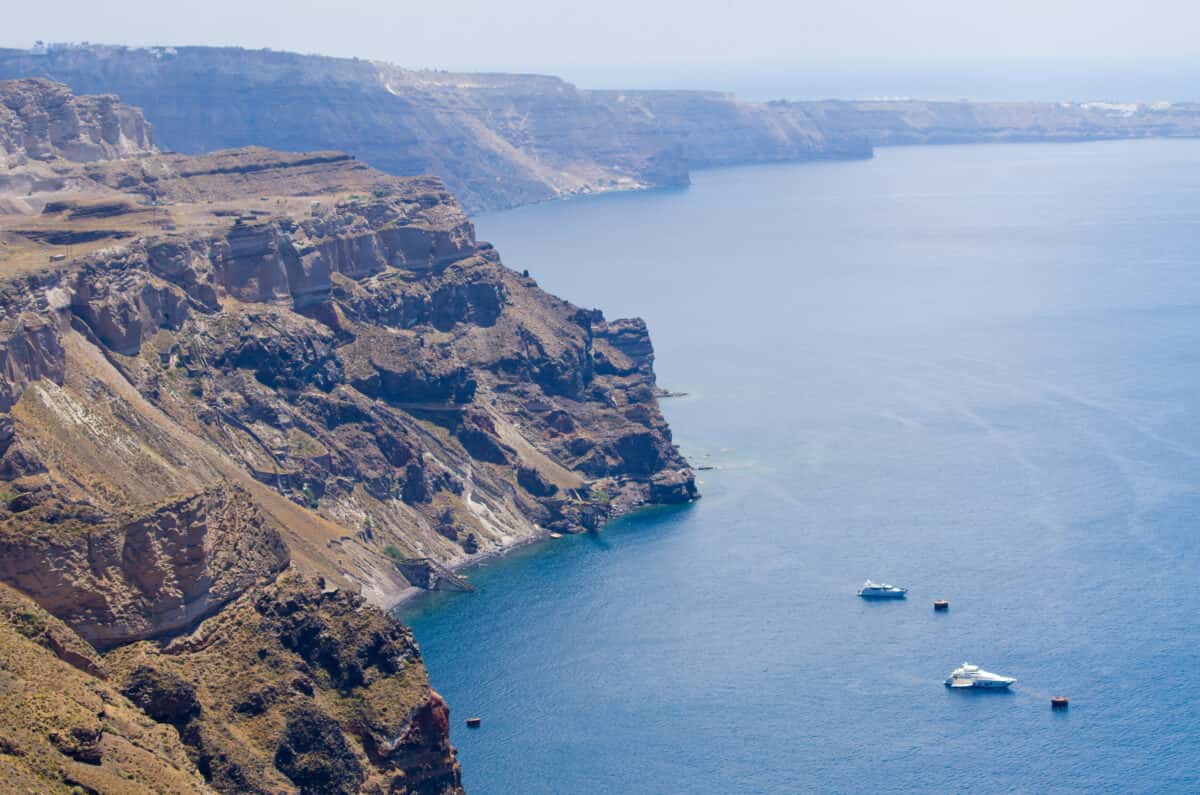
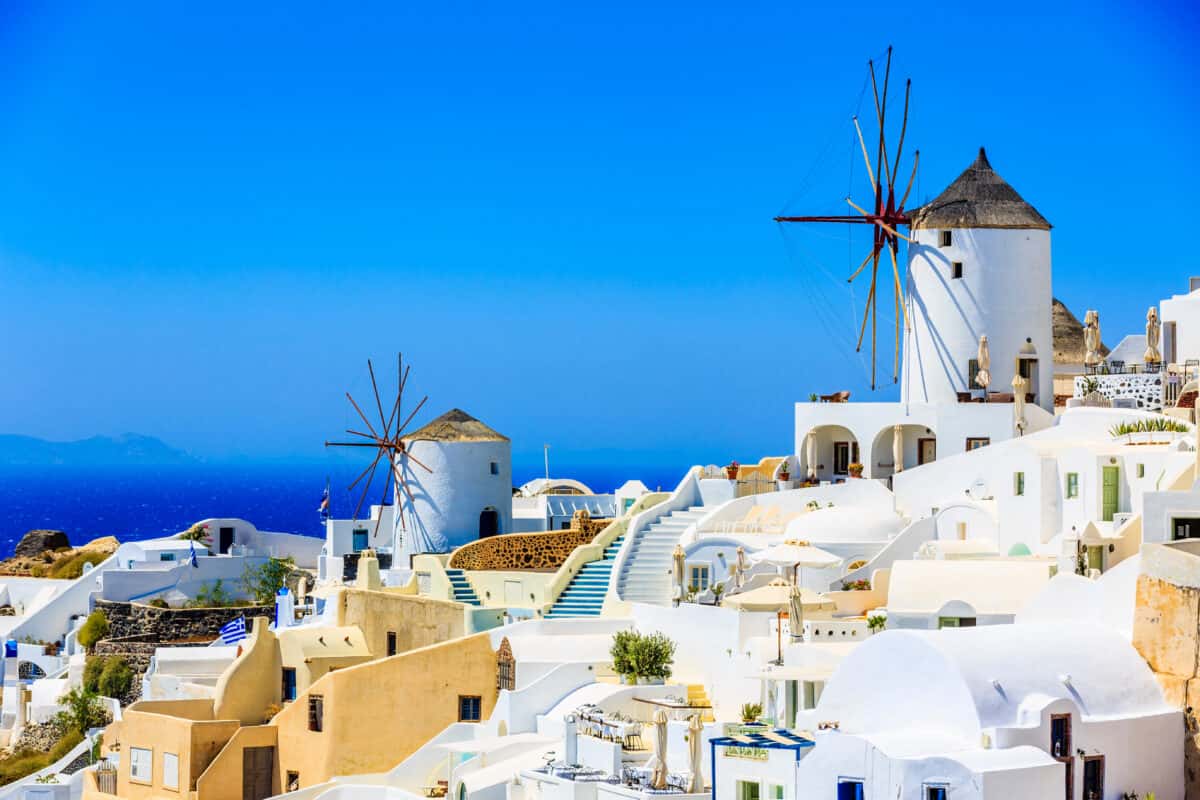
Anafiotika copies the look of real Cycladic villages. For comparison, the two photos below show Plaka on Milos, a Cycladic island village that shares the name. Notice the same whitewash, painted doors and shutters, and stepped lanes that the Anafi builders brought to Athens.
Houses in Plaka you can go inside
- Benizelos Mansion, 96 Adrianou Street: the Ottoman-era konak described above, with its courtyard, well, hayati and Roman remains under glass.
- Museum of Greek Folk Musical Instruments, 1-3 Diogenous Street: housed in the neoclassical Lassanis Mansion next to the Roman Agora, with about 1,200 Greek folk instruments from the 18th century onward.
- Centre of Folk Art and Tradition, 6 Angelikis Hatzimichali Street: the former home of folklorist Angeliki Hatzimichali (1895-1965), who grew up in Plaka, now a city museum of folk art.
- Paul and Alexandra Canellopoulos Museum, 12 Theorias Street: art from antiquity to the Byzantine period, shown in the neoclassical Michaleas Mansion plus a newer wing.
Opening days and times for these small museums change often and differ between sources, so confirm on each museum’s official site before planning a day around them. Pair them with the Acropolis and the Acropolis Museum, both a short walk away.
How Plaka’s houses were saved
Between 1950 and the late 1970s, Plaka came close to losing its houses. Residents moved out as tourism grew, homes were converted into bars and nightclubs, and some were demolished to make open-air car parks. A survey in 1973-1975 counted 190 entertainment venues with room for 18,000 customers.
In January 1979 the state began a master plan prepared under architect Dionysis Zivas, the first time Greece protected an entire historic neighbourhood rather than individual buildings. About 500 of Plaka’s 1,100 buildings were placed under a preservation order, half the length of its streets became pedestrian, all existing shop signs came down under new rules, overhead cables were removed and street lamps were replaced with copies of the old gaslights. Owners received grants and low-interest loans to repair façades, and the programme was completed in 1986. Many restored houses were lived in again, which is why Plaka still feels like a neighbourhood and not a museum set.
A self-guided walk past the houses
- Start at Monastiraki Square and walk east on Adrianou Street to number 96, the Benizelos Mansion.
- Continue toward the Roman Agora and turn onto Diogenous Street for the Lassanis Mansion and its museum.
- Wander the lanes around the Roman Agora and the Tower of the Winds, then Mnisikleous Street, to spot restored popular houses with tiled roofs and courtyards.
- Climb Prytaneiou Street, turn left onto Stratonos Street along the base of the Acropolis, and take the stairways up into Anafiotika.
- Come back down toward Theorias Street for the Michaleas Mansion, then drop into lower Plaka around Kydathineon Street for neoclassical façades and the Centre of Folk Art and Tradition.
Allow two to three hours with one museum stop. The lanes are steep and paved with marble that gets slippery, so wear shoes with grip.
Buying, renting or staying in a Plaka house
Many searches for houses in Plaka come from people looking to buy or rent. Listings do appear, from apartments in converted neoclassical buildings to whole historic houses with courtyards, but these are not ordinary properties. Roughly half of Plaka’s buildings carry a preservation order that sets the terms for any restoration, and in Anafiotika heritage rules restrict alterations. Before committing to a listed house, have a Greek lawyer and an architect check what the listing allows you to change, and budget for traditional materials and slower permits.
For a short stay, the easier route is a hotel or apartment inside a restored building in the heart of Plaka, a few minutes on foot from Syntagma and Monastiraki metro stations.
Tips for visiting and photographing
- Go before 9 am. Anafiotika and upper Plaka fill with tour groups by mid-morning, especially on cruise-ship days.
- Most of these houses are private homes. Keep noise down, stay on public paths and stairways, and never step into courtyards or onto doorsteps.
- Look up. Balcony brackets, roof ornaments and painted balcony undersides are easy to miss at street level.
- Late-afternoon light is warm on the ochre neoclassical façades, and the lit Parthenon rises above Anafiotika after dark.
- Anafiotika has no cafés or shops, so stop for coffee in lower Plaka or Monastiraki before you climb.
Want to wake up on one of these streets? Our guide to the best hotels in Plaka covers the area’s hotels, and where to stay in Athens compares Plaka with other neighbourhoods. For more nearby, see the best things to do in Athens.
Frequently asked questions
What is the oldest house in Plaka?
The Benizelos Mansion at 96 Adrianou Street is the oldest surviving house in Athens. Its ground floor has 16th-century traces, and most of the building dates from the first half of the 18th century.
Can you go inside the old houses of Plaka?
Yes, several. The Benizelos Mansion, the Lassanis Mansion (Museum of Greek Folk Musical Instruments), the Centre of Folk Art and Tradition and the Canellopoulos Museum are historic houses open to visitors. Check opening days before you go.
Do people still live in Anafiotika?
Yes. Around 45 houses remain and most are private homes, some still owned by descendants of the original Anafi families. Visitors can walk the public alleys but should not enter courtyards.
Why do some houses in Plaka look like Greek island houses?
Those are in Anafiotika. Stonemasons from the Cycladic island of Anafi built them in the 1840s in the whitewashed style of their home island while working on King Otto’s building projects in Athens.
Is Plaka in Athens the same as Plaka on Milos?
No. Plaka in Athens is the historic neighbourhood below the Acropolis. Plaka on Milos is the hilltop capital of a Cycladic island. They share a name and some whitewashed architecture, but they are different places.
Reviews
Loading traveler reality-check data for Houses of Plaka.
Amenities & Features
- Tourist Attraction