Plaka
Historic Athens old quarter situated beneath the Acropolis, filled with neoclassical architecture, pedestrian streets, and family tavernas.
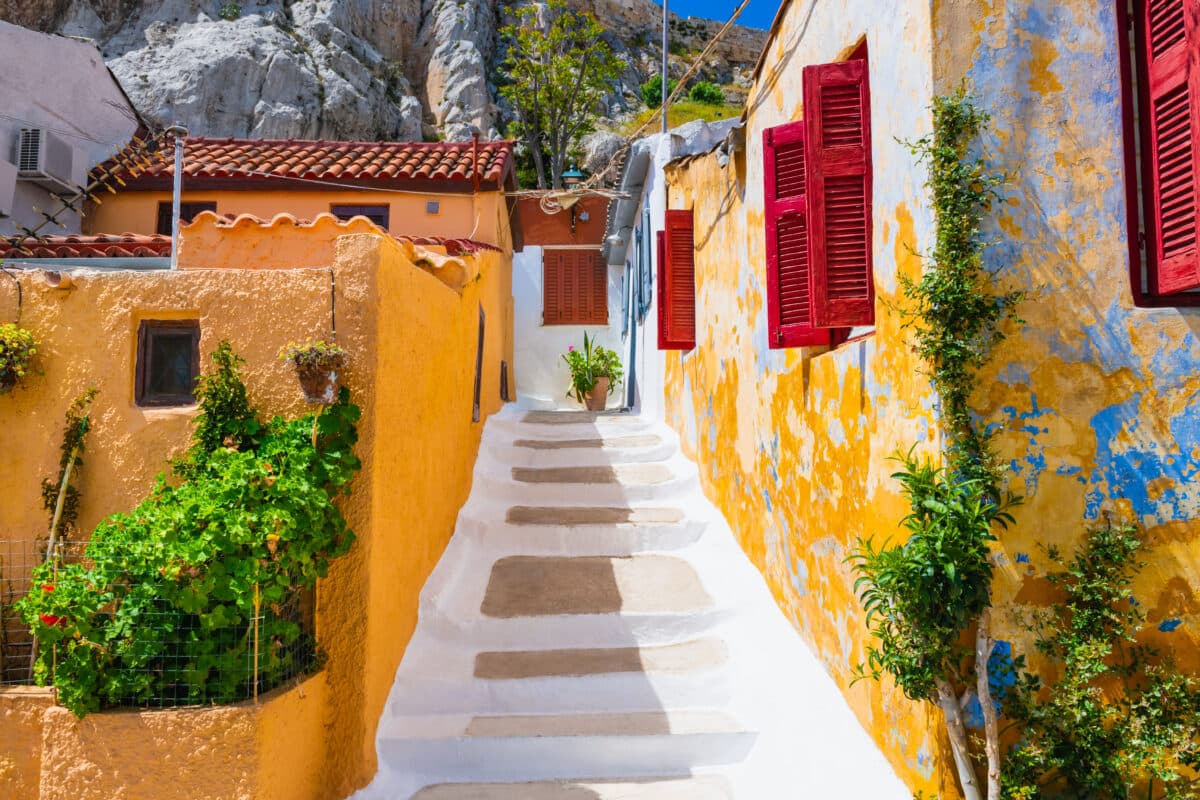
About Plaka
Plaka in Athens is the historic neighborhood below the Acropolis, known for pedestrian lanes, neoclassical houses, small squares, Byzantine churches, tavernas, souvenir shops, and easy walks to Anafiotika, Monastiraki, Syntagma, the Ancient Agora, and the Acropolis Museum. It is one of the easiest places in Athens to combine sightseeing, food, shopping, and old-city atmosphere in a single walk.
Plaka works best as a wandering district rather than a checklist stop. Come for the streets, the Acropolis views, the Greek architecture, and the contrast between ancient landmarks and everyday city life. It is beautiful, central, and convenient, but it is also tourist-heavy, so the best visit usually means starting early, going slowly, and leaving room for side streets instead of only following the busiest lanes.
Quick facts
| Best for | First-time Athens visitors, walking, dining, shopping, photography, families, couples, and anyone who wants a central old-town base |
| Location | Below the Acropolis, between the Acropolis area, Anafiotika, Monastiraki, and Syntagma |
| Type of place | Historic neighborhood, old town district, shopping area, dining district, and walking area |
| Entry fee | Free. Plaka is a public neighborhood, though museums, archaeological sites, restaurants, and shops have their own prices. |
| Opening hours | The neighborhood itself is open 24/7. Individual shops, churches, museums, cafés, and restaurants keep their own hours. |
| Time needed | 1 to 3 hours for a relaxed walk, or half a day if you add food, shopping, Anafiotika, museums, and nearby ancient sites. |
| Closest metro stops | Acropoli, Monastiraki, and Syntagma are the most useful stations, depending on where you start. |
| Best time to visit | Early morning for quiet streets, late afternoon for atmosphere, or evening for tavernas and cafés. |
| Good to know | Plaka is charming but busy. Expect crowds near the main streets, restaurants, and Acropolis walking routes. |
What is Plaka in Athens?
Plaka is Athens’ best-known historic neighborhood, set around the northern and eastern slopes of the Acropolis. It is often described as the city’s old town because it has narrow lanes, preserved houses, small churches, cafés, tavernas, shops, and archaeological remains packed into a compact central area.
For most travelers, Plaka is not about one single attraction. The point is the area itself: walking under the Acropolis, passing old stone walls and neoclassical homes, stopping for Greek food, browsing small shops, and moving easily between major Athens landmarks. It is one of the most practical places to start if you want the historic center to make sense on foot.
Why Plaka is worth visiting
Plaka is worth visiting because it gives you the most accessible version of old Athens in one compact area. You can move from a café table to an ancient monument, from a souvenir shop to a Byzantine church, and from a busy restaurant street to a quiet residential lane in just a few minutes.
It is also one of the easiest neighborhoods to combine with other Athens highlights. The Acropolis, Acropolis Museum, Ancient Agora, Roman Agora, Tower of the Winds, Monastiraki, Syntagma, and Anafiotika are all close enough to connect in a single walking route. That makes Plaka especially useful for short Athens itineraries, cruise stops, first visits to Greece, and travelers who want to avoid unnecessary transit inside the historic center.
Best things to do in Plaka
The best things to do in Plaka are simple: walk, look up, take side streets, compare small shops, and leave time for food. The neighborhood rewards curiosity more than speed.
- Wander Adrianou and Kidathinaion streets: these are two of the main arteries for shops, cafés, tavernas, and old-town atmosphere.
- Explore Anafiotika: the small upper area of Plaka feels different from the rest of Athens, with narrow lanes, whitewashed houses, steps, and Cycladic-style details.
- See the Monument of Lysicrates: a small but important ancient monument near one of Plaka’s most attractive café areas.
- Walk toward the Roman Agora and Tower of the Winds: this route connects Plaka with some of the most atmospheric ancient remains in central Athens.
- Visit smaller museums: look for the Museum of Modern Greek Culture, the Bath House of the Winds, the Museum of Greek Folk Musical Instruments, the Jewish Museum of Greece, and other small cultural stops nearby.
- Shop carefully: Plaka has Greek sandals, jewelry, ceramics, leather goods, olive products, icons, prints, and souvenirs, but quality varies a lot.
- Stop for Greek food: the area has plenty of tavernas, cafés, bakeries, and restaurants, from quick bites to longer dinners.
Best walking route through Plaka

A simple Plaka walking route starts near Syntagma, continues toward Kidathinaion Street and Filomousou Eterias Square, climbs toward Anafiotika, then loops past Tripodon Street and the Monument of Lysicrates before finishing near the Acropolis Museum or Monastiraki.
This route works because it gives you the main Plaka experience without turning the neighborhood into a forced march. You get shops, churches, steps, Acropolis views, café streets, and access to nearby archaeological sites. If you are visiting in summer, do the uphill sections early or late in the day and keep midday for lunch, museums, or shaded breaks.
Plaka and Anafiotika
Anafiotika is the small, Cycladic-style quarter on the upper side of Plaka beneath the Acropolis. It was created by builders from the island of Anafi who came to Athens in the 19th century, and it still feels more like a tiny island village than a normal city district.
This is one of the best parts of Plaka if you want a quieter walk and a more unusual view of Athens. Expect narrow alleys, steps, low houses, cats, plants, white walls, and small details rather than big attractions. Keep in mind that people still live here, so walk respectfully, keep noise down, and avoid blocking doorways for photos.
Read Also:Where to Stay in Athens
Where to eat
Plaka is full of restaurants, cafés, bakeries, and tavernas, but it is also one of the most tourist-facing dining areas in Athens. That does not mean you should avoid eating here. It means you should be selective.
- For atmosphere: look around the steps and side streets near Mnisikleous and Anafiotika.
- For a slower meal: choose a taverna on a quieter side street rather than the most crowded corner with aggressive hosts.
- For better value: compare menus before sitting down and avoid places that rely only on huge photo menus.
- For a quick stop: bakeries, cafés, souvlaki shops, and casual Greek restaurants are easier than a long lunch during a sightseeing day.
- For dinner: book ahead in busy seasons or be ready to walk toward nearby Monastiraki, Psiri, Syntagma, or Koukaki if the main Plaka streets feel too crowded.
A good rule in Plaka: eat where the menu is focused, the prices are visible, and the staff are not pressuring you from the sidewalk. The neighborhood can still deliver a memorable Greek meal, especially if you avoid choosing purely by location.
Where to shop in Plaka
Plaka is one of the easiest places in Athens to shop for small gifts and Greek souvenirs. You will find sandals, jewelry, ceramics, linen, leather goods, olive oil products, honey, spices, prints, religious icons, and handmade-looking décor. Some shops are genuinely local and interesting; others sell generic tourist stock.
For better shopping, slow down and compare quality. Check stitching on sandals and bags, ask where products are made, avoid fragile items that are hard to pack, and do not assume every “Greek-style” item was made in Greece. If you want more variety, combine Plaka with Monastiraki and the surrounding market streets.
Is Plaka a good place to stay in Athens?
Yes, Plaka is a good place to stay in Athens if walkability is your top priority. Hotels in Plaka work especially well for first-time visitors, short Athens stays, families, couples, and travelers who want to reach the Acropolis, Acropolis Museum, Monastiraki, Syntagma, and restaurants without relying much on taxis or public transport.
The tradeoff is that Plaka can be more expensive and more crowded than less central neighborhoods. Some streets are lively at night, some hotels have limited vehicle access, and parking is not the reason to stay here. If you want a quieter base, compare Plaka with Koukaki, Mets, Thissio, Kolonaki, or parts of Syntagma.
Is Plaka safe?
Plaka is generally a safe neighborhood for visitors, especially around the main pedestrian streets, restaurants, shops, and sightseeing routes. It is central, busy, and heavily visited. Normal city awareness still matters: watch your bag in crowded areas, keep phones and wallets secure, and avoid wandering distracted through empty side streets late at night.
At night, Plaka is usually comfortable around active restaurant streets and well-used routes, but the mood changes from street to street. If you are tired, carrying bags, or returning late from another area, a taxi or ride service can be the easier choice. The main risk for most travelers is not danger; it is pickpocketing, overpaying, or choosing a tourist-trap restaurant without checking the menu.
When to visit
The best time to visit Plaka is early morning or late afternoon. Early morning gives you quieter lanes, softer light, and fewer tour groups. Late afternoon and evening are better for cafés, tavernas, and a more social atmosphere.
In July and August, midday can feel hot and crowded, especially on exposed lanes and steps. Use the hottest part of the day for shaded cafés, museums, or a break indoors. In winter, Plaka is calmer, but some shops and restaurants may keep shorter hours, so check specific places before planning a meal or museum visit.
How to get there
Plaka is easy to reach because it sits in the middle of Athens’ historic center. The most useful metro stations are Acropoli, Monastiraki, and Syntagma. Which one is best depends on your route: Acropoli is useful for the Acropolis Museum and upper Plaka, Monastiraki is useful for the market side and Ancient Agora, and Syntagma is useful if you are coming from central Athens or the airport metro.
- From the Acropolis: walk downhill toward Plaka, Anafiotika, or the Acropolis Museum area.
- From Syntagma: walk toward Filellinon and Kidathinaion, or take the metro one stop depending on your starting point.
- From Monastiraki: walk into lower Plaka through Adrianou and nearby lanes.
- From Athens Airport: take Metro Line 3 toward central Athens and get off at Syntagma or Monastiraki, then walk or take a short taxi depending on your hotel.
- From Piraeus or the cruise port: use metro connections toward Monastiraki or central Athens, then continue on foot into Plaka.
Read Also:Acropolis vs Parthenon
Nearby attractions to combine with Plaka
Plaka is one of the best-connected areas in Athens for sightseeing. You can combine it with ancient sites, museums, shopping streets, and food neighborhoods without needing a complicated itinerary.
- Acropolis: the landmark above Plaka and the main reason many visitors start here.
- Acropolis Museum: one of the best museum pairings with a Plaka walk.
- Anafiotika: the small island-like quarter on the upper edge of Plaka.
- Roman Agora and Tower of the Winds: atmospheric ancient sites close to lower Plaka.
- Ancient Agora: a deeper look at ancient Athens, close to Monastiraki and Thissio.
- Monastiraki: useful for flea-market streets, casual food, shopping, and metro access.
- Syntagma and the National Garden: good if you want to connect Plaka with Parliament, the changing of the guard, and a greener walking route.
- Bath House of the Winds: a small museum connected with the Museum of Modern Greek Culture and Athens’ Ottoman-era urban history.
Responsible visiting
Plaka is not just a tourist district. It still has residents, churches, small homes, private courtyards, and narrow lanes that were not built for constant crowds. The best way to visit is to treat the neighborhood as a living part of Athens rather than an open-air photo set.
- Keep noise low in residential lanes, especially around Anafiotika.
- Do not block doorways, steps, or church entrances for photos.
- Choose independent shops and restaurants when possible.
- Check prices before ordering or buying.
- Avoid leaving litter, especially around steps and viewpoints.
- Give yourself time instead of rushing from one photo spot to another.
Bottom line
Plaka is one of the most useful and memorable neighborhoods in Athens for first-time visitors. It is central, walkable, historic, easy to combine with the Acropolis, and full of restaurants, shops, churches, museums, and side streets. The downside is that it can feel crowded and commercial, especially near the main tourist lanes.
Go anyway, but go with the right expectations. Use Plaka as a walking district, not just a photo stop. Start early or return in the evening, explore Anafiotika respectfully, compare restaurants before sitting down, and leave time for nearby sights like the Acropolis Museum, Roman Agora, Ancient Agora, and Monastiraki.
FAQs
What is Plaka?
Plaka is the historic old neighborhood below the Acropolis. It is known for pedestrian streets, neoclassical houses, small churches, shops, tavernas, cafés, museums, and easy access to major ancient sites.
Where is Plaka in Athens?
Plaka is in central Athens, Greece, around the northern and eastern slopes of the Acropolis. It sits between the Acropolis area, Anafiotika, Monastiraki, and Syntagma, making it one of the most walkable areas in the historic center.
What should I do in Plaka?
The best things to do in Plaka are walking the old streets, exploring Anafiotika, visiting small museums and churches, seeing nearby ancient sites, shopping for Greek souvenirs, and stopping for coffee, lunch, or dinner in the neighborhood’s tavernas and cafés.
Is Plaka worth visiting?
Yes. Plaka is worth visiting because it gives you a compact, walkable version of historic Athens right below the Acropolis. It can be crowded, but its location, architecture, food, shops, and nearby landmarks make it one of the most practical areas to explore.
How far is Plaka from the Acropolis?
Plaka sits directly below the Acropolis, so the distance depends on where you start in the neighborhood. Many Plaka streets are within a short walk of the Acropolis slopes, Anafiotika, and the Acropolis Museum.
What time does Plaka close?
Plaka does not close because it is a public neighborhood. Shops, restaurants, cafés, museums, churches, and nearby archaeological sites each have their own opening hours. Restaurants and cafés usually stay open later than shops and museums.
Is Plaka safe at night?
Plaka is generally safe at night around the main restaurant streets, pedestrian lanes, and hotel areas. Use normal city caution, watch for pickpockets in crowds, avoid walking distracted with valuables visible, and take a taxi if you are tired or returning late through quieter lanes.
Is Plaka a good neighborhood to stay in Athens?
Plaka is a good neighborhood to stay in Athens if you want maximum walkability and easy access to the Acropolis, Acropolis Museum, Monastiraki, Syntagma, restaurants, and shops. It is less ideal if you want a quiet, low-cost hotel area or easy parking.
How do you get from Athens Airport to Plaka?
From Athens Airport, take Metro Line 3 toward central Athens and get off at Syntagma or Monastiraki, then walk or take a short taxi to your exact Plaka address. A taxi from the airport is easier with luggage, but traffic and nighttime rates can change the cost.
Where should I eat in Plaka?
Eat in Plaka where the menu is clear, prices are visible, and the restaurant is not relying only on a high-traffic location. Side-street tavernas, casual Greek restaurants, bakeries, cafés, and places near Anafiotika or Mnisikleous can work well, but compare before sitting down.
What does Plaka mean in Greek?
For travel purposes, Plaka is best treated as a place name for Athens’ historic neighborhood below the Acropolis. You may see different explanations of the name, including links to old Athens or to a stone slab, while modern Greek uses similar wording in other contexts. The important point for visitors is that Plaka refers to the old central district, not a separate town.
Is Plaka the same as Anafiotika?
No. Anafiotika is a smaller quarter within upper Plaka, directly below the Acropolis. Plaka is the larger historic neighborhood, while Anafiotika is the island-like area with narrow steps, whitewashed houses, and Cycladic-style details.
Reviews
Loading traveler reality-check data for Plaka.
Amenities & Features
- Tourist Attraction