Little Venice
Picturesque waterfront district in Mykonos Town where historic captains’ houses hover directly above the sea, famous for sunset drinks.
About Little Venice
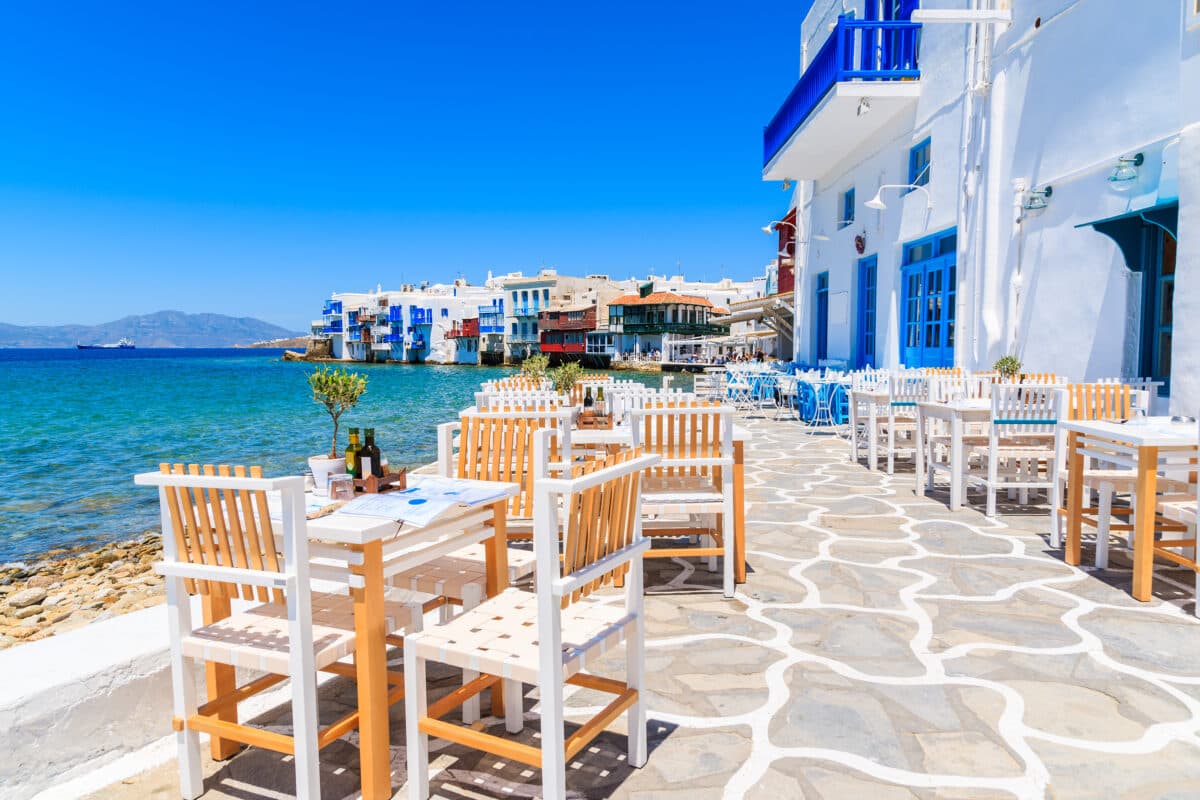
Little Venice (Alefkandra) is a small waterfront quarter on the western edge of Mykonos Town, Greece, where 18th-century captains’ houses rise straight out of the Aegean Sea with colourful wooden balconies hanging over the water. It is free to visit, open at all hours and best known as the island’s classic sunset spot, with cocktail bars and restaurants set just above the waves. The famous Kato Mili windmills stand on the low hill a two-minute walk away, so most people see both on the same evening.

This guide covers the history behind the name, the best times and places to watch the sunset, the bars and restaurants worth knowing, how to get there from the ports and bus stations, and whether it lives up to the hype. For the rest of the island, start with our Mykonos travel guide.
Little Venice at a glance
| Detail | What to know |
|---|---|
| Location | Western waterfront of Mykonos Town (Chora), between the Kastro quarter and the windmills |
| Local names | Alefkandra; also Mikri Venetia (Greek for Little Venice) |
| Entry | Free public neighbourhood, open 24 hours |
| From the main square | About a 5-minute walk through the lanes |
| From Fabrika bus station | About a 6-minute walk |
| From the New Port | Sea Bus to the Old Port (2 euros, about 8 minutes), then walk |
| Best time | Before 11:00 for quiet photos; 45 to 60 minutes before sunset for a waterfront table |
| Typical cocktail price | Around 15 to 20 euros or more at waterfront bars |
| Nearby | Kato Mili windmills, Panagia Paraportiani, Kastro, Matoyianni Street |
What is Little Venice in Mykonos?
Mykonos Little Venice is a neighbourhood inside Mykonos Town rather than a separate village or a ticketed attraction. It is a short row of tall, whitewashed Cycladic houses built on the rocks along the shoreline, where the sea reaches the foundations and the upper floors project out over the water on painted wooden balconies in red, blue and green.
Most of the houses in Little Venice now hold bars, cafés, restaurants, art galleries and small boutiques. By day the lanes behind the waterfront are a pleasant place to wander and shop; around sunset the terraces fill with people holding drinks and cameras; after dark the area becomes one of the busiest bar streets in Chora. The whole stretch is compact and you can walk its length in a few minutes, but most people come here to linger.
Why is it called Little Venice?
The name comes from the way the houses rise directly from the water, which reminded visitors of the palazzi lining the canals of Venice. There is also a real Venetian thread in the island’s past. The island of Mykonos came under Venetian rule in the 13th century and was an important stop on Mediterranean trade routes, and the Ottomans took over in 1537.
The houses you see today mostly date from the 18th century, when wealthy sea captains and merchants built them right on the waterline. Locals called them the kapetaneika, the captains’ houses. Their sea-level doors and storerooms let goods move straight between the boats and the buildings, and local lore holds that some of that cargo was smuggled or linked to the piracy that troubled the Aegean for centuries. The older local name for the area, Alefkandra, is still used for the small square and shoreline at its southern end.
What to see and do in Little Venice
- Walk the narrow waterfront lane and the small Alefkandra square for the classic view of balconies hanging over the waves.
- Stop for a coffee or a drink at a waterfront café during the day, when tables are easy to find.
- Browse the galleries, jewellery shops and fashion boutiques tucked into the lanes behind the sea.
- Take photos of the Kato Mili windmills from the waterfront, then climb the short hill and photograph the quarter back from the windmill hill.
- Watch the sunset from a bar terrace, the public walkway or the windmill hill.
- Stay for dinner and let the evening roll into Chora’s bar scene.
A simple Little Venice evening route
The quarter works best as one stop on a walk through Chora. This simple itinerary covers the main sights in about two to three hours and ends at the right place for sunset:
- Start on Matoyianni Street, the main shopping lane of Mykonos Town, in the late afternoon.
- Walk to the Church of Panagia Paraportiani in the Kastro quarter, five whitewashed chapels joined into one building between 1425 and the 17th century.
- Continue a few steps along the shore into Little Venice and take a seat 45 to 60 minutes before sunset.
- After the sun drops, walk up to the Kato Mili windmills for the blue-hour view back over the waterfront.
- Head back into the lanes of Chora for dinner.
Our guide to the best things to do in Mykonos ranks Little Venice at sunset among the island’s top experiences and covers the windmills, museums and Delos day trips that fit around it. If you would rather watch the sun set from the water, a sunset cruise from the Old Port passes right in front of the balconies.
Little Venice sunset: timing and best spots
The quarter faces west across open water, so on a clear evening the sun sinks straight into the Aegean in front of the bars. That view is why the quarter fills up every summer evening. In July and August, plan to arrive 45 to 60 minutes before sunset if you want a railing table; in May, June, September and October you can usually cut that to about 30 minutes.

Approximate sunset times in Mykonos on the first day of each month are below. Times shift by a minute or two from year to year, so check a sunset calculator for your exact date.
| Date | Approximate sunset (local time) | Arrive for a waterfront table by |
|---|---|---|
| 1 May | 20:08 | About 19:30 |
| 1 June | 20:33 | About 19:40 |
| 1 July | 20:43 | About 19:45 |
| 1 August | 20:26 | About 19:30 |
| 1 September | 19:48 | About 19:00 |
| 1 October | 19:02 | About 18:30 |
Free places to watch the sunset
- The public walkway along the waterfront, which costs nothing but gets crowded in peak season.
- The small Alefkandra square and shoreline at the southern end of the quarter.
- The windmill hill, which is slightly higher, a little less crowded and gives wider sunset views with the balconies in the foreground.
Bars and restaurants in Little Venice
The old captains’ houses now hold some of the best-known restaurants and bars in Mykonos. You pay for the setting as much as the drink: expect roughly 15 to 20 euros or more for a waterfront cocktail and around 40 to 60 euros per person for dinner with wine.
| Venue | Type | Known for |
|---|---|---|
| Caprice Bar | Cocktail bar | One of the longest-running sunset bars on the waterfront |
| Galleraki | Cocktail bar | Named after the art gallery inside; wide cocktail list and a lively late-night crowd |
| Katerina’s | Restaurant and cocktail bar | Two floors on Agion Anargyron street with a sea-view bar upstairs |
| Semeli Bar | Bar with DJ | Open since 2005; turns into a small dance club after midnight |
| Nigrita Bar | Bar | A reliable sunset drink on the water |
| Kastro’s | Restaurant | A handful of tiny balconies over the water facing the windmills; reserve well ahead |
| Funky Kitchen | Fine dining | Creative Greek fusion on a hidden terrace in a Little Venice alley |
If the waterfront prices feel steep, walk a few minutes inland, where menus are usually cheaper, or eat in the inland village of Ano Mera on another night. For more options, see our list of the best restaurants in Mykonos, and for club nights beyond the town bars, read our guide to the Greek party islands.
How to get to Little Venice
Mykonos Town is pedestrianised, so everyone arrives on foot for the last stretch. Head west through the lanes toward the sea and follow signs for Little Venice or the windmills. When the buildings start hanging over the water, you are there.
- From Fabrika bus station: about a 6-minute walk. Fabrika is where most KTEL buses to the south-coast beaches start; times are in our Mykonos bus schedule.
- From the Old Port: about a 10 to 15 minute walk through the lanes of Chora.
- From the New Port (Tourlos), where ferries and many cruise ships dock: take the Sea Bus to the Old Port for 2 euros (about 8 minutes, roughly every 30 minutes), or take a bus or taxi into town, then walk.
- By car, scooter or ATV: park at one of the public lots on the edge of town. The nearest is about a 3-minute walk away. A rental car is handy for the beaches but of no use inside Chora. Spaces run short in July and August.
Cruise passengers tend to reach Chora around 11:00, which is when the lanes get busiest in the middle of the day. If your ship is in port, walk the waterfront early and save the windmills for last.
When to visit Little Venice
The mood here changes through the day. Before about 11:00 it is almost empty, the light is soft and the water is often calm, so this is the time for clean photos. Around sunset it is at its busiest and most atmospheric. After dark the bars take over and music carries on into the early hours.
For the time of year, May, June, September and October give warm evenings and far smaller crowds. July and August bring the biggest crowds and the highest prices. Our guide to the best time to visit Mykonos goes month by month.
Wind, waves and the meltemi
The meltemi is the dry north wind of the Aegean summer. It blows mainly from June to September, often for several days in a row, and it can be strong. On windy days waves hit the foundations of the houses and spray can reach the front row of tables. Many visitors love the drama, but keep phones and cameras covered, and take care on the lower stones by the water, which get wet and slippery.
Tips for visiting Little Venice
- Arrive before sunset rather than right at sunset. You get better walking photos, a better chance of a table and time to enjoy the area before it becomes shoulder to shoulder in peak season.
- Book ahead for dinner at waterfront restaurants in July and August, and ask specifically for a balcony or sea-view table.
- Wear shoes with some grip for the polished paving and wet stones near the water.
- Bring a light layer for the evening, as the waterfront gets breezy after dark.
- Dress smart-casual in the evening. Beachwear is out of place at most of the waterfront bars at night.
- Visit on a calm morning if photography is your priority, and at sunset if atmosphere is.
- There is no swimming beach here, so plan beach time elsewhere; our guide to the best Mykonos beaches covers the options, from Ornos Beach to Elia.
Where to stay near Little Venice
Staying in Mykonos Town puts the waterfront, the windmills and the restaurants of Chora on your doorstep, and it is the easiest base if you do not want to rely on taxis at night. The trade-offs are noise from bars that stay open late, narrow lanes that are hard to navigate with luggage and high prices. Many of the best accommodation options with uninterrupted sea views sit on the edges of town rather than in the old lanes. Our guide on where to stay in Mykonos compares Chora with Ornos, Platis Gialos and the quieter north.
Is Little Venice worth visiting?
Yes, especially on a first trip to Mykonos. The sight of picturesque 18th-century houses standing in the sea with the windmills beside them is the defining image of this Greek island, and it costs nothing to see. The honest caveats are that it is crowded at sunset in summer, the lanes jam up when cruise ships are in, and waterfront drinks carry a real premium.
If you want a quiet sunset instead, go early in the season, stand on the windmill hill instead of a bar terrace, or drive out to the Armenistis Lighthouse on the north coast. Deciding between islands? Our comparison of Mykonos vs Santorini weighs sunsets, nightlife and beaches side by side.
Frequently asked questions
Is Little Venice the same as Mykonos Town?
No. Little Venice (Alefkandra) is one small neighbourhood inside Mykonos Town, also called Chora. It covers the western waterfront between the Kastro quarter and the Kato Mili windmills, so you reach it on foot from anywhere in town.
Does Little Venice have a beach?
Not really. The houses sit directly on the rocks, so there is no swimming beach in front of the bars. The small Alefkandra shoreline and Megali Ammos, roughly 300 metres south, are the closest places to reach the water, while the main swimming beaches are on the south coast.
Does it cost anything to visit Little Venice?
No. Little Venice is a public neighbourhood with no ticket, gate or opening hours. You only pay if you sit down at a bar or restaurant, where waterfront cocktails usually cost around 15 to 20 euros or more.
Is Little Venice safe at night?
Little Venice is busy and lively late into the night in summer and is generally a comfortable place to walk. The main hazards are practical: wet, slippery stones near the water, narrow crowded lanes after sunset and phones or cameras exposed to spray on windy days.
Where do you park for Little Venice?
The lanes of Chora are pedestrianised, so you cannot drive into Little Venice. Use one of the public parking areas on the edge of town; the closest is about a 3-minute walk away. In peak season the bus to Fabrika station is usually easier than finding a space.
Reviews
Loading traveler reality-check data for Little Venice.
Amenities & Features
- Tourist Attraction