Benaki Museum
Flagship Benaki museum in Kolonaki tracing Greek history and culture from prehistoric antiquities to Ottoman-era folk costumes and El Greco art.
About Benaki Museum
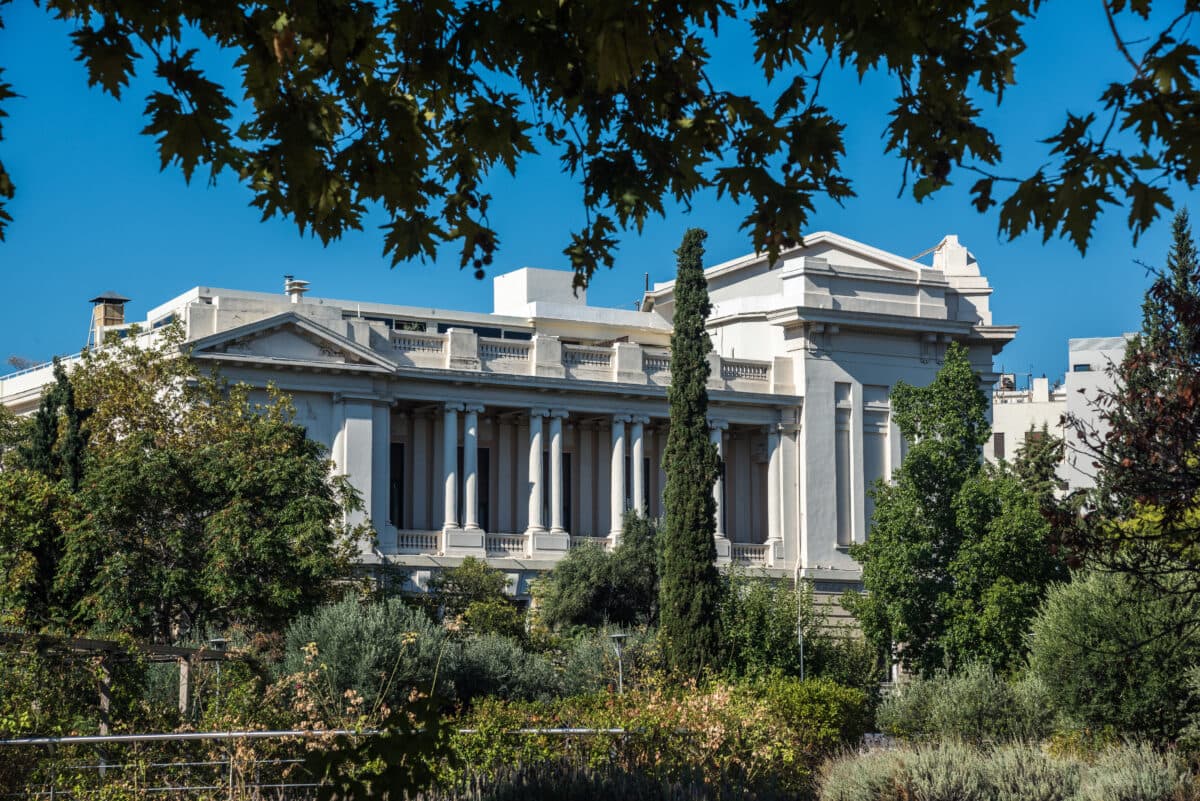
The Benaki Museum is one of the most rewarding museums in Athens for travelers who want a broad view of Greek culture beyond the archaeological-site circuit. Its main building, officially the Benaki Museum of Greek Culture, occupies the former Benakis family mansion at 1 Koumbari Street and Vasilissis Sofias Avenue, on the edge of Kolonaki near the National Garden and the Hellenic Parliament. The permanent exhibition presents Greek art and history in chronological order from prehistory to the 20th century, linking archaeology, Byzantine art, folk traditions, decorative arts and modern history in one visit.
What makes the Benaki especially useful is its range. Archaeological museums in Athens largely stop at antiquity; here you can follow the story of Greece forward through Byzantine icons, 18th-century domestic interiors, regional costume and the Greek War of Independence, all inside a single house. For first-time visitors, it offers real cultural depth without the time commitment of a giant all-day institution.
Benaki Museum at a glance
| Official name | Benaki Museum of Greek Culture (main building) |
|---|---|
| Address | 1 Koumbari St. & Vasilissis Sofias Ave., 106 74 Athens |
| Opening hours | Mon, Wed, Fri, Sat 10:00–18:00; Thu 10:00–00:00; Sun 10:00–16:00 |
| Closed | Tuesdays and 12 fixed and movable holidays (listed below) |
| Adult ticket | €12 permanent exhibition; €9 reduced |
| Free entry | Permanent exhibition every Thursday from 18:00 to midnight; visitors under 22 |
| Nearest metro | Syntagma (lines 2 and 3) or Evangelismos (line 3) |
| Phone | +30 210 367 1000 |
Hours and prices from the Benaki Museum’s official visitor information, checked September 2026.
A short history of the Benaki mansion
The oldest part of the building dates to 1867–1868, when it was a much simpler house than the one you see today. Emmanuel Benakis, a cotton merchant from Alexandria who later served as mayor of Athens from 1914 to 1915, bought the property in 1910 when his family settled permanently in Athens. In 1911 the architect Anastasios Metaxas extended it with a ballroom and service quarters.
His son Antonis Benakis (1873–1954), born in Alexandria, spent decades collecting Greek, Byzantine, Islamic and Coptic art. Antonis and his three sisters, Alexandra, Penelope and Argine, donated the mansion and the collections to the Greek nation, and the museum opened to the public in 1931. Penelope is better known as the novelist Penelope Delta. After a long refurbishment from 1989 to 2000, the building reopened with today’s chronological display of Greek culture.
What to see in the permanent collection
The museum groups its main-building holdings into prehistoric, ancient Greek and Roman art; Byzantine art; post-Byzantine and neo-Hellenic art; historic heirlooms; and paintings, drawings and prints. The route runs upward through the house in rough chronological order, so starting on the ground floor and working up gives the clearest sense of the story.
Prehistoric, ancient Greek and Roman art
Antiquities make up a smaller share of the display than at the National Archaeological Museum, but the pottery, figurines, jewelry and tools are chosen to represent each period. Treat this section as the opening chapter of a longer timeline rather than the main event.
Byzantine and post-Byzantine art, including El Greco
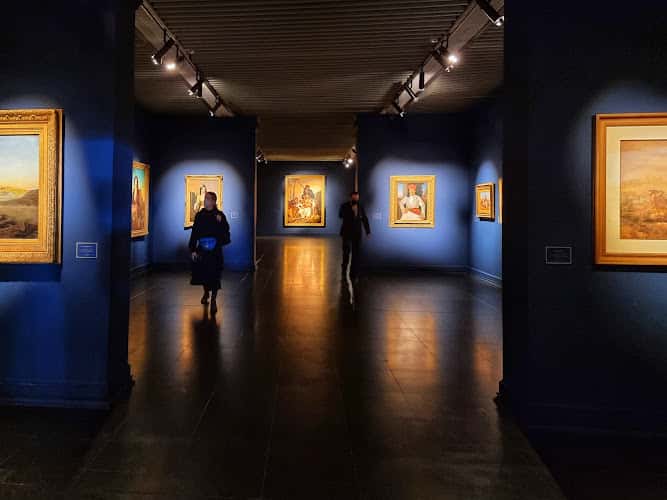
Byzantine and post-Byzantine art was Antonis Benakis’s main collecting interest, and most of the icons he acquired come from workshops in Crete and the Ionian Islands between the late 15th and 18th centuries. The collection also holds two early works by Domenikos Theotokopoulos, known as El Greco: The Adoration of the Magi (c. 1565–1567), signed “the hand of Domenikos” and painted while he was still working in Candia on Venetian-ruled Crete, and Saint Luke Painting the Virgin and Child. Both predate his move to Italy and Spain, which makes them rare in any collection.
The Kozani reception rooms
Two of the most memorable spaces in the museum are the reconstructed reception rooms from 18th-century mansions in Kozani, a town in western Macedonia. Their carved, gilded and painted wooden walls and ceilings show how wealthy merchant families received guests during the Ottoman period. One of these interiors arrived through the Helen Stathatou bequest and is installed in a wing added in 1968. Give the rooms a few minutes; they show daily life in a way that objects in display cases cannot.
Modern Greece on the third floor
Galleries 33 to 36 on the third floor were refreshed with new exhibits and tell the story of modern Greece from the years just before the Greek Revolution of 1821 to the Second World War. This is where the historic heirlooms collection, including weapons, uniforms and paintings connected to the War of Independence, gives the chronological route its ending.
Benaki Museum hours, tickets and free entry
| Day | Main building hours |
|---|---|
| Monday | 10:00–18:00 |
| Tuesday | Closed |
| Wednesday | 10:00–18:00 |
| Thursday | 10:00–00:00 (midnight) |
| Friday | 10:00–18:00 |
| Saturday | 10:00–18:00 |
| Sunday | 10:00–16:00 |
Benaki Museum of Greek Culture opening hours.
The museum is also closed on New Year’s Day, Epiphany, Clean Monday, March 25, Easter Sunday, Easter Monday, May 1, Holy Spirit Day, August 15, October 28, Christmas Day and Boxing Day. Several of these follow the Orthodox calendar and move each year, so check the date before planning a holiday-week visit.
Ticket prices
- Permanent exhibition: €12 full, €9 reduced
- Temporary exhibitions: €8–10 full, €6–8 reduced, depending on the show
- Permanent plus temporary exhibition: 20% off the combined total
- Combined ticket for the Museum of Greek Culture and the Ghika Gallery: available through the official ticket site
- Turbopass: not valid at the Benaki Museum
Reduced tickets apply to students, visitors over 65, teachers, archaeologists, conservators and European Youth Card holders, among others. Entry is free for visitors under 22, disabled visitors, holders of a Greek unemployment card, licensed guides, ICOM members and Benaki Museum members. You can buy tickets at the door or through the official Benaki Museum e-ticket page.
Free Thursday evenings
Every Thursday from 18:00 to midnight, the permanent exhibition is free for everyone. The offer excludes organized tours and guided group visits, and temporary exhibitions still require a ticket. Admission to both the permanent and temporary exhibitions is also free on International Museum Day, May 18, when the building is open.
How to get to the Benaki Museum
The main building stands at the corner of Koumbari Street and Vasilissis Sofias Avenue, a short walk east of Syntagma Square along the edge of the National Garden. The closest metro stations are Syntagma, on lines 2 and 3, and Evangelismos, on line 3. Trolleybus 3 and bus routes 022, 060, 203, 204, 211, 214, 220, 221, 224, 235, 608, 622, 815, A5, E14, X14 and X95 also stop nearby.
Wheelchair users should use the entrance on Vasilissis Sofias Avenue. Guide and assistance dogs are allowed throughout the museum. Other pets on a leash are allowed in the shop and open-air courtyards, but not in the galleries or the cafe-restaurant.
Tips for planning your visit
- Avoid Tuesdays, when the main building is closed, and remember that Sunday hours end at 16:00.
- Visit on a Thursday evening for free entry to the permanent exhibition and a late opening until midnight.
- Plan roughly two to three hours for the permanent collection, and more if you add a temporary exhibition.
- Reserve a table at the cafe-restaurant if you want to eat there in the evening; it opens 10:00–18:00 on Monday and Sunday and 10:00–01:00 Wednesday to Saturday (reservations: +30 210 367 1030).
- Check the current temporary exhibitions on the Museum of Greek Culture page, since shows rotate throughout the year.
- Pair the visit with a walk through the National Garden or the streets of Kolonaki, both a few minutes away.
Other Benaki Museum venues in Athens
“Benaki Museum” can refer to the whole institution, not only the Kolonaki mansion. The Museum of Greek Culture is the flagship of a network of Benaki venues across Athens that includes the Museum of Islamic Art, the Pireos 138 building for temporary and contemporary exhibitions, the Ghika Gallery, the Yannis Pappas Studio and the Toy Museum. Each venue has its own hours and tickets. Pireos 138, for example, opens Thursday and Sunday 10:00–18:00 and Friday and Saturday 10:00–22:00.
Frequently asked questions
Is the Benaki Museum the same as the Benaki Museum of Islamic Art?
No. The Museum of Islamic Art is a separate Benaki Museum building with its own hours and tickets. The main building on Koumbari Street and Vasilissis Sofias Avenue is the Benaki Museum of Greek Culture.
Can I use the Athens Turbopass at the Benaki Museum?
No. The Benaki Museum states that Turbopass is not valid at the museum, so you need a standard ticket unless you qualify for free entry.
Is the Benaki Museum wheelchair accessible?
Wheelchair users should enter the main building through the entrance on Vasilissis Sofias Avenue. For specific access questions, call the museum on +30 210 367 1000 before your visit.
How long does it take to visit the Benaki Museum?
As a planning estimate, allow about two to three hours for the permanent collection. Add extra time for a temporary exhibition or a meal at the cafe-restaurant.
Reviews
Loading traveler reality-check data for Benaki Museum.
Amenities & Features
- Cultural Experience
- Indoor Activity