Koloumbos Beach
Remote volcanic beach on Santorini’s northeast coast featuring dramatic coastal cliffs, dark sand, and an unspoiled setting away from tourist hubs.
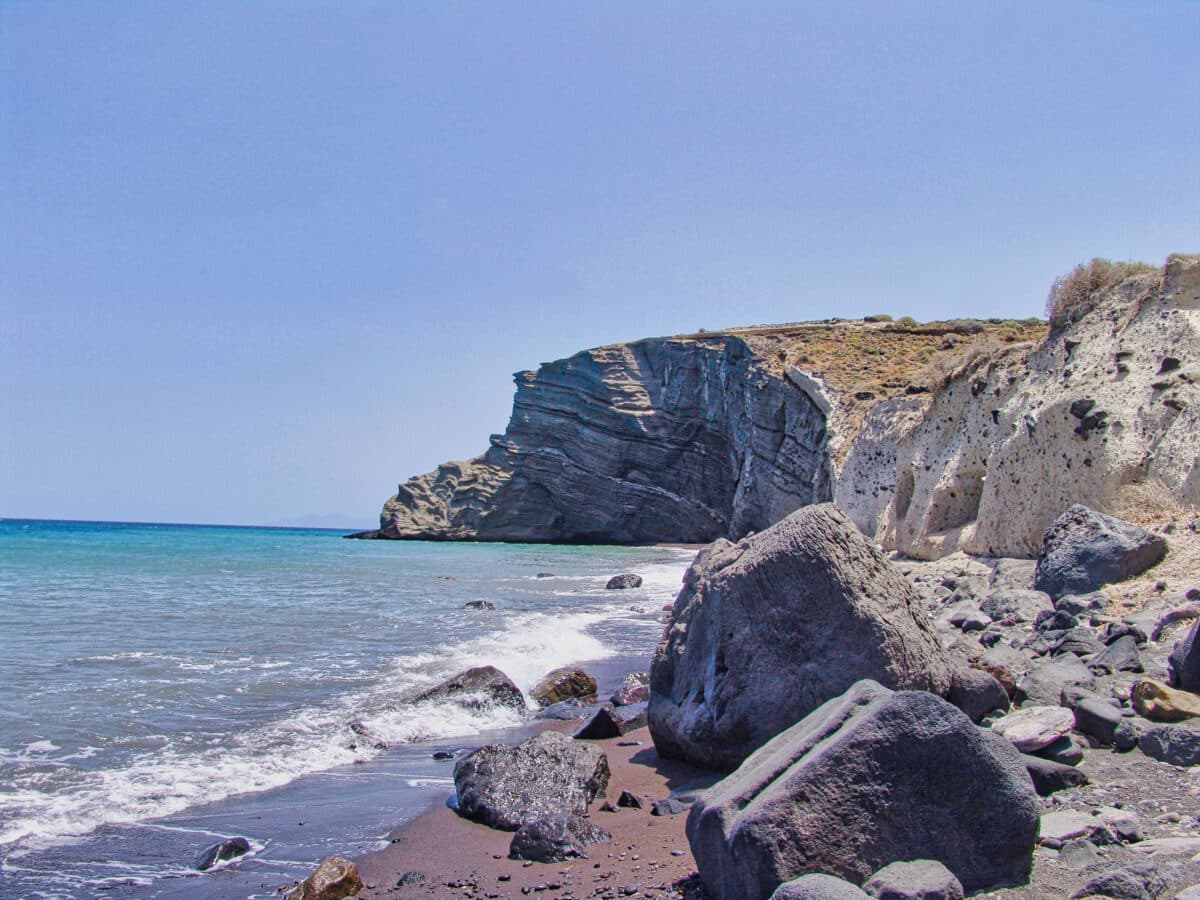
About Koloumbos Beach
Koloumbos Beach is a wild, mostly undeveloped beach of dark volcanic sand and pebbles on Santorini’s northeast coast, about 4 km east of Oia. It is also written as Columbo Beach, Cape Columbo Beach, Kolumbo Beach, or Koloumbo Beach, and takes its name from Cape Koloumbos and the Kolumbo submarine volcano offshore. Choose it for cliffs, space, and quiet water on a calm day, not for beach-club comfort.
There are no lifeguards, showers, or paved paths, and no proper row of sunbeds. At most, a small seasonal cantina may open at one end in summer, so do not count on it. Everything depends on preparation: bring water, food, shade, and sturdy footwear, and know how you will get back before you arrive.

Koloumbos Beach at a Glance
| Place type | Remote, mostly unorganized volcanic beach |
| Location | Northeast coast of Santorini, beside Baxedes and about 4 km east of Oia |
| Also written as | Columbo Beach, Cape Columbo Beach, Kolumbo Beach, Koloumbo Beach, Koloumpo Beach |
| Beach surface | Dark grey and black volcanic sand mixed with black and red pebbles and rocks |
| Setting | Tall, wind-carved cliffs behind the beach, with views out toward Ios and Amorgos |
| Facilities | None you can rely on; a small seasonal cantina may operate at one end |
| Lifeguards | None |
| Entry fee | Free |
| Access | Car, ATV, scooter, or taxi to the roadside above the beach, then a walk down an unpaved path |
| Bus | No published KTEL timetable to the beach |
| Best for | Quiet swimming on calm days, snorkeling, photography, couples, and self-sufficient travelers |
| Not ideal for | Young children, weak swimmers, travelers who need step-free access, and strong north-wind days |
| Time needed | 2–4 hours for a relaxed beach stop |
| Best time | Low-wind mornings or late afternoons from late spring to early autumn |
Why Visit Koloumbos Beach?
Koloumbos shows you a side of Santorini that the caldera villages do not. Instead of promenades, umbrellas, and loungers, you get a long, narrow shoreline of dark sand and pebbles, cliffs shaped by wind and salt, and open Aegean views toward Ios and Amorgos. On the Greek National Tourism Organisation’s own list of Santorini beaches, Koloumbos and neighboring Baxedes are the picks for tranquility.
The beach is close enough to Oia to pair with a village visit, yet it feels far removed from the sunset crowds. That contrast is the reason to come. If you want sunbeds, beach bars, and easy parking, compare the organized options in our guide to the best beaches in Santorini instead.
Best reason to go: Koloumbos is one of the few Santorini beaches that has stayed largely free of infrastructure, which makes it the island’s best choice for space and silence near Oia.
What Koloumbos Beach Is Like
The cliffs set the tone. They rise almost vertically behind the beach, and the dark sand and pebbles give it a far moodier look than Santorini’s whitewashed villages. The water is clear, but the beach faces north and east, so it takes the full force of the north wind. On a still morning it can look like a lake; on a windy afternoon, waves and currents can make it unsuitable for swimming.
Shade is scarce. There are no umbrellas, but later in the day the rock on the right-hand side of the beach (as you face the sea) casts a shadow over part of the shore. At that same end, a small cape and rocks lead toward a sea cave, which is the main draw for snorkelers on calm days.
Koloumbos also has a long-standing reputation as Santorini’s naturist-friendly beach, with the far end of the beach unofficially clothing-optional. Nudity is tolerated there by custom rather than signposted, so pick a discreet spot away from the main access point and respect visitors who stay clothed.

Best Things to Do at Koloumbos Beach
Swim when the sea is calm
Treat swimming as a calm-weather plan, not a given. Look at the water before you go in: if waves are breaking hard or the wind is pushing across the bay, stay on the shore. Swim with a companion, stay within your ability, and remember that nobody is watching the water.
Snorkel near the cape and sea cave
The rocks and small cape at the end of the beach make Koloumbos one of the better snorkeling spots on the north coast. Bring your own mask and fins, since there is nowhere to rent them. Only swim toward the cave in flat conditions, and never go alone.
Walk the shoreline and take photos
Walk away from the access path and you usually have long stretches of beach to yourself. The dark sand, eroded cliffs, and open sea work well for photography, especially in soft morning or late-afternoon light. Keep back from the base of the cliffs while you shoot.
Hike down on Santorini Trail 10
If you enjoy walking, the waymarked Santorini Trail 10 from Finikia to Kolumbos runs downhill from the caldera ridge near Oia to the east coast. It passes through a traditional settlement and abandoned farmland. Outdooractive rates it easy at about 5.4 km and 2 hours 20 minutes, with 34 m of ascent and 216 m of descent. There is almost no shade, so start early and carry plenty of water.
Pair it with Oia or Baxedes

A beach morning at Koloumbos followed by an evening in Oia makes a good half-day plan. Oia has the food, shops, and caldera views that the beach lacks; see our guide to the best things to do in Oia to plan the second half. Baxedes Beach is right next door, about a 10-minute walk along the coast, if you want to see both beaches in one visit.
The Kolumbo Volcano Offshore
Kolumbo is an active submarine volcano. Its main cone, about 3 km across, lies roughly 7 km off Santorini’s northeast coast, and it is the largest of at least 25 underwater volcanic centers in the area. Its only recorded eruption, in 1650, broke the sea surface. Toxic gases and pyroclastic flows reached Santorini and killed dozens of people (historical accounts put the toll at 60–70) along with many animals. The collapse that followed also sent a tsunami into nearby islands.
Kolumbo made international news again in early 2025. From late January, tens of thousands of earthquakes struck between Santorini, Kolumbo, and Amorgos, peaking with a magnitude 5.2 quake on 10 February 2025 before activity faded from March. A study published in Nature in September 2025 concluded that rising magma triggered the swarm and pointed to a link between the magma reservoirs of Santorini and Kolumbo. Seismologists at the time judged the chance of an eruption to be relatively low, and monitoring around the volcano has since been expanded.
For a beach visit, the practical risks are local: waves, wind, footing, and the cliffs. You cannot see or feel the volcano from the shore, and the beach is not a hot spring. If Greek authorities issue a new seismic advisory, follow the official 112 emergency alerts and any local beach closures.
How to Get to Koloumbos Beach
| Option | How it works | Best for |
|---|---|---|
| Car, ATV, or scooter | Drive toward Baxedes, park at the roadside or a small dirt area above the beach, then walk down | Most visitors; the most flexible option |
| Taxi or transfer | Drop-off at the road above the beach; book the return in advance | Travelers staying in Oia or Fira without a vehicle |
| On foot | Trail 10 from Finikia (about 5.4 km), or about 10 minutes along the coast from Baxedes Beach | Hikers and early starters |
| KTEL bus | No published timetable to the beach; ask KTEL about service toward Baxedes | Only for flexible travelers with a backup plan |
By car, ATV, or scooter
Driving is the easiest way to reach Koloumbos. From Oia, follow the road toward Baxedes, about 4 km east, and continue along the coast road. There is no official parking lot. Park considerately at the roadside or in the small dirt area near the shore, then take the unpaved path down. Guides describe the walk as anything from short to about 15 minutes, depending on where you leave the car. The path is narrow and loose in places, so wear proper shoes, not flip-flops. In spring, the path is lined with wildflowers.
By taxi or private transfer
A taxi works if you do not want to drive, but arrange your pickup before you head down. Taxis do not wait near the beach, and mobile signal and taxi availability can be patchy in high season. Our Santorini beaches guide puts a taxi from Fira at around €30. Confirm the fare with the driver before you set off. For all the transport options on the island, see how to get around Santorini.
By bus
Do not plan a Koloumbos day around the bus. KTEL Santorini’s fare table does list a Fira–Baxedes journey (15.5 km, €2.20 full fare, per the May 2026 table). However, the operator publishes no separate timetable for Baxedes or Koloumbos, so a listed fare does not prove there is a usable daily departure. If you want to try, call KTEL on +30 22860 25404 or ask at Fira Bus Station for the route, boarding point, and return times. Our Santorini bus schedule covers the main routes.
What to Bring
- Water: more than you think you need, especially in July and August or if you hike in.
- Food: snacks or a packed lunch; the nearest proper meals are in Oia and the nearby villages.
- Shade: a beach umbrella or small tent, plus a hat, sunscreen, and sunglasses.
- Footwear: sturdy sandals or water shoes for the path, hot dark sand, and pebbles.
- Mask and fins: for snorkeling around the rocks and cave on calm days.
- Towel or thick beach mat: the pebbly surface is not groomed.
- Cash: useful if the seasonal cantina is open.
- Trash bag: there are no bins to rely on, so pack out everything you bring.
Safety and Etiquette
Koloumbos is not a difficult beach, but it is an isolated one. It has no lifeguards, no reliable facilities, uneven ground, and sea conditions that change with the wind. Check the wind forecast before you leave, and go with at least one other person.
Keep away from the base of the cliffs, and do not climb loose rock. Santorini’s volcanic cliffs are prone to rockfalls. After the 2025 earthquakes, Red Beach was closed following a landslide, and Greece’s earthquake planning chief named Ammoudi and Armeni below Oia among the island’s priority landslide-risk areas. Choose a spot on open sand, well clear of overhangs.
Respect the quiet: keep music off or low, give other groups space, and do not photograph people, particularly in the clothing-optional section. Leave the beach cleaner than you found it.
Best Time to Visit Koloumbos Beach
Visit on a calm morning or late afternoon between late spring and early autumn. Mornings bring the quietest water and the fewest people. Late afternoons bring softer light, lower heat, and the shadow from the rock on the right side of the beach.
In July and August, the Meltemi north wind decides the day. Koloumbos is completely open to it, so on strong-wind days choose a more sheltered beach on the south coast, such as Perissa or Perivolos, and save Koloumbos for a still day.
Nearby Places to Combine With Koloumbos Beach
| Nearby place | Why add it |
|---|---|
| Oia | About 4 km west; the obvious pairing for food, shops, caldera views, and sunset |
| Baxedes Beach | The neighboring beach, about a 10-minute walk along the coast, and just as quiet |
| Finikia | Traditional village near Oia and the start of Trail 10 down to Koloumbos |
| Pori Beach | Another low-key beach farther along Santorini’s northeast coast |
| Ammoudi Bay | Fish tavernas and rock swimming below Oia; the area has been flagged for landslide risk, so check current access |
| Fira | The island’s main bus hub and the base for most onward transport |
Staying nearby? Oia is the closest base. Compare areas in our guide on where to stay in Santorini, or see our shortlist of the best hotels in Oia.
Frequently Asked Questions
Is Koloumbos Beach worth visiting?
Yes, if you want a quiet, wild volcanic beach near Oia with cliffs, clear water, and few people. Skip it if you need lifeguards, sunbeds, restaurants, easy parking, or guaranteed calm water.
Is Koloumbos Beach a nudist beach?
Koloumbos is Santorini’s best-known naturist-friendly beach, and the far end is unofficially clothing-optional. Nudity is tolerated there by custom rather than signposted, so choose a discreet spot away from the access path.
Can you get to Koloumbos Beach by bus?
Not reliably. KTEL lists a Fira to Baxedes fare but publishes no separate timetable for Baxedes or Koloumbos. Ask KTEL on +30 22860 25404 before relying on a bus, or go by car, ATV, scooter, or taxi.
Is Koloumbos Beach good for families?
It is better suited to adults and confident swimmers. The lack of lifeguards and facilities, the unpaved path, and exposure to the north wind make Kamari, Perissa, Perivolos, or Monolithos easier choices for families with young children.
Is it safe to visit Koloumbos Beach after the 2025 earthquakes?
The 2025 earthquake swarm near Kolumbo faded from March 2025, and the volcano is now more closely monitored. The practical risks at the beach are waves, wind, and rockfall, so swim only in calm conditions, stay clear of the cliffs, and follow any official 112 alerts.
Is Koloumbos Beach the same as Cape Columbo Beach?
Yes. Koloumbos, Columbo, Cape Columbo, Kolumbo, Koloumbo, and Koloumpo are different spellings for the same beach below Cape Koloumbos on Santorini’s northeast coast.
Reviews
Loading traveler reality-check data for Koloumbos Beach.
Amenities & Features
- Swimming
- Sunbathing