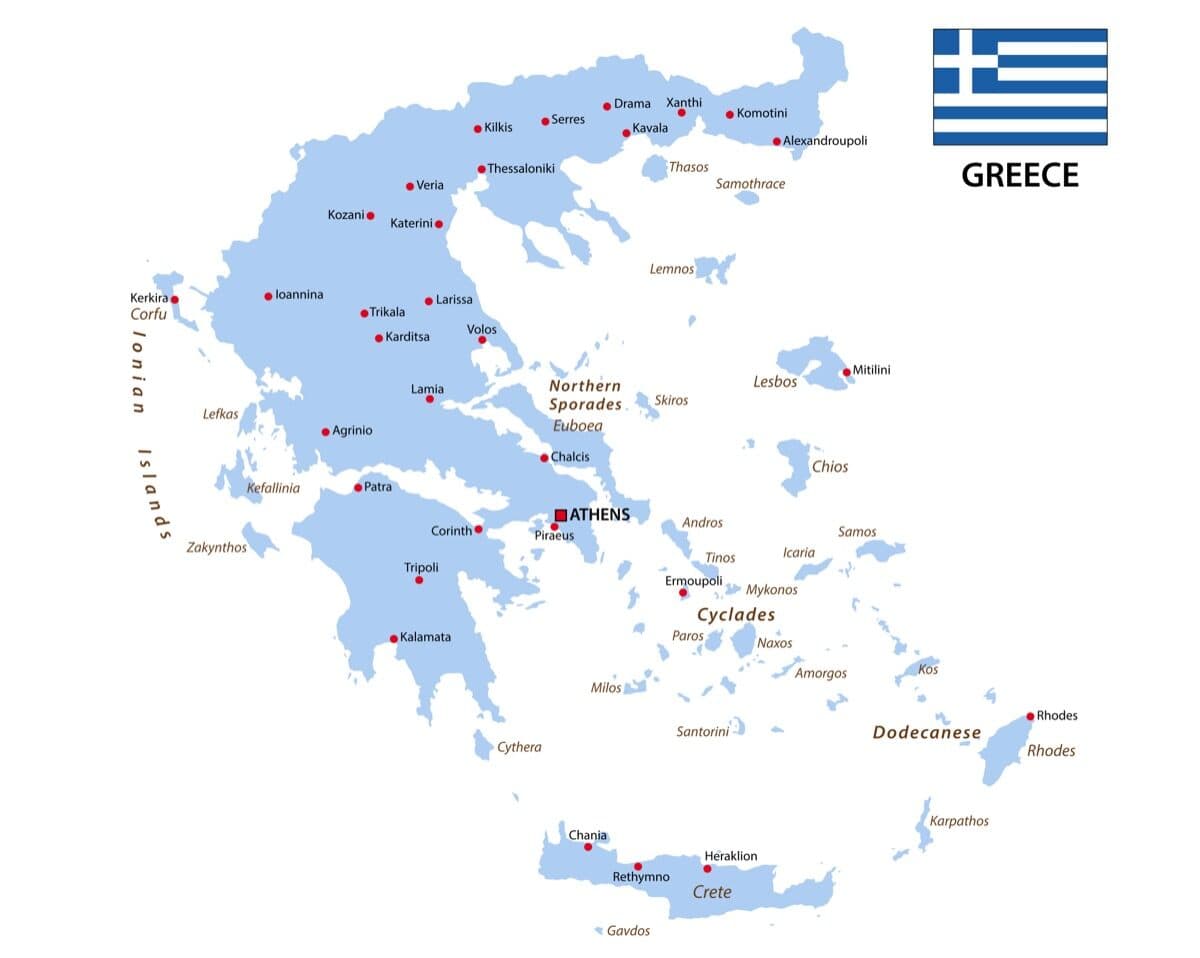
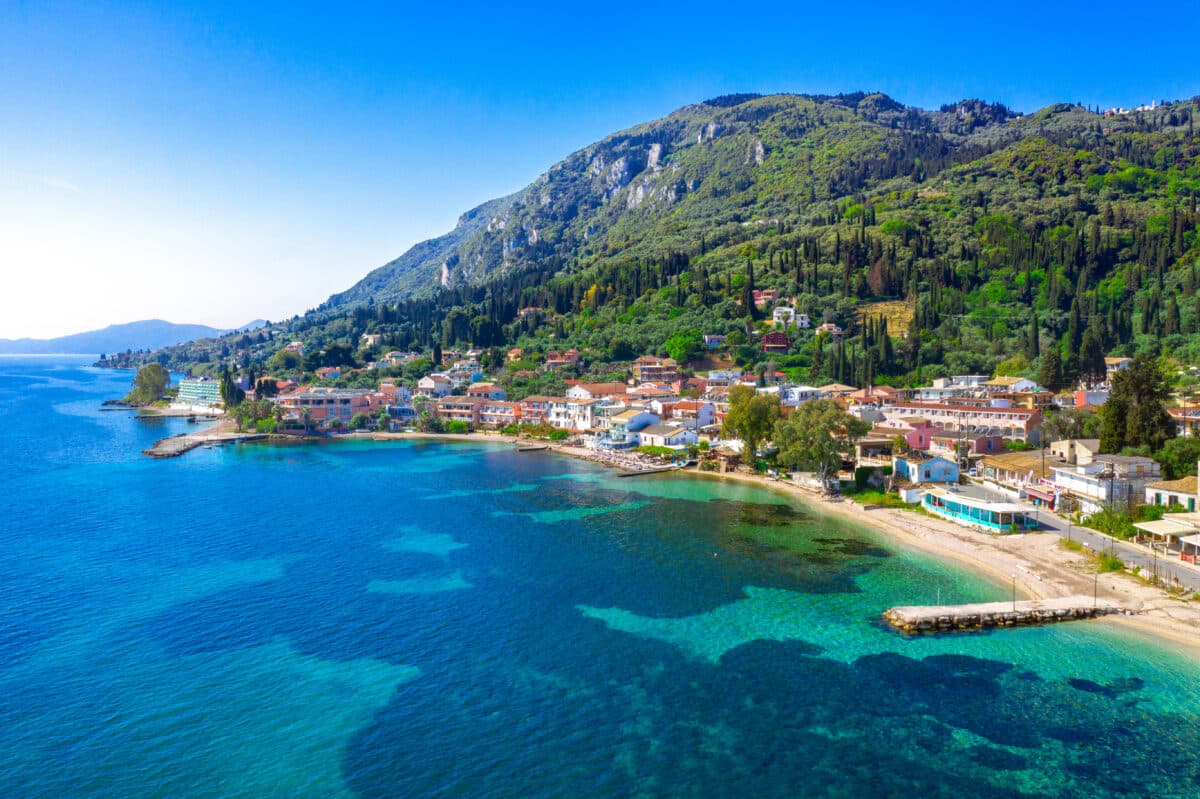
Greece is located in southeastern Europe, surrounded by the Aegean, Ionian, and Mediterranean Seas. It is divided into the mainland and several major island groups: the Cyclades (home to Santorini and Mykonos), Crete, the Dodecanese, the Ionian Islands, and the Sporades. Below are detailed, downloadable maps of each region.
Surface
131,957 km²
Mainland plus islands
Coastline
~13,676 km
11th longest in the world
Islands
~6,000 · 227 inhabited
Across the Aegean and Ionian
Main gateway
Athens (ATH)
Piraeus ferry port adjacent
5 most-searched islands markedFerry routes from PiraeusInternational airports
Explore the interactive map
Pan, zoom, and click any marker for a destination card and a link to the full guide.
Popular island
Destination
Vector tiles: OpenFreeMap Renderer: MapLibre GL JS Markers and routes maintained by the Santorini Secrets editorial team.
How to use the Greece map
The map is built for trip planning, not just orientation. Each step below pairs a map interaction with the linked guides we publish for ferries, flights, and accommodation.
Step 1
Pick a region
Use the regions panel beside the map to fly directly to mainland Greece, the Cyclades, Crete, the Dodecanese, or the Ionian Islands.
Step 2
Open a marker for context
Each marker is a destination — click or tap it to read a short orientation paragraph and jump to the matching travel guide.
Step 3
Plan ferries and flights between hubs
Compare distances between Athens, Santorini, Mykonos, Crete, Rhodes, and Corfu, then cross-check schedules in our ferry and flight planners.
Step 4
Zoom and pan to scout coastlines
Pinch to zoom on mobile or scroll-zoom on desktop (hold Cmd/Ctrl) to inspect ports, beaches, and inland routes without leaving the page.
Island groups
Navigating the Greek islands on the Greece map
Greece's islands split into distinct planning zones. Each has its own ferry pattern, climate, and traveler fit, so choose the group first, then drill into a destination guide.
The Cyclades / κυκλάδες
Most popular
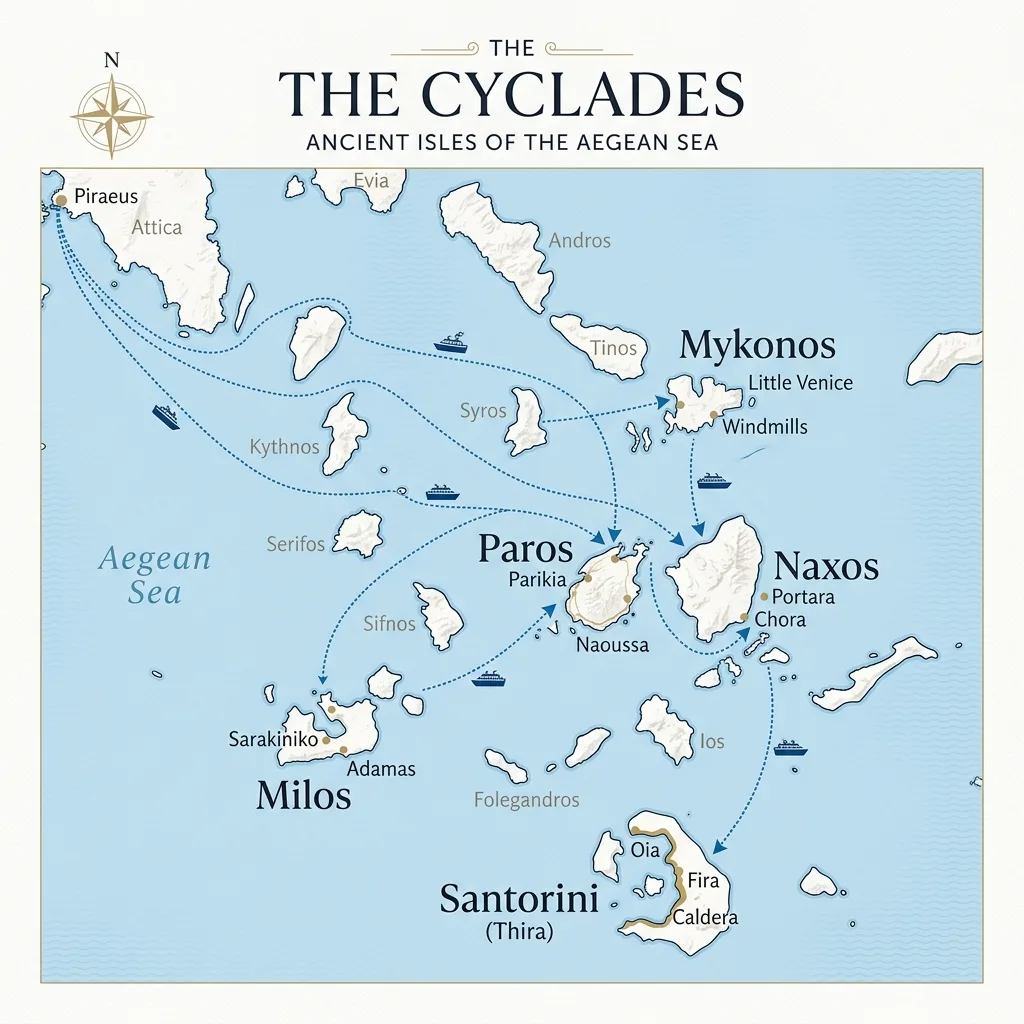
The Cyclades Map
As the archetypal Greek islands, the Cyclades are defined by their iconic whitewashed villages and blue-domed churches. Famed destinations like Santorini and Mykonos anchor this central Aegean archipelago, making it the premier choice for classic island hopping.
Main Islands: Santorini, Mykonos, Naxos, Paros
Best Reached By: Santorini Airport (JTR), Mykonos Airport (JMK), Naxos Port, and Paros Port.
Transit Time: High frequency and dense connections during summer, but high-speed vessels are highly sensitive to seasonal Meltemi winds.
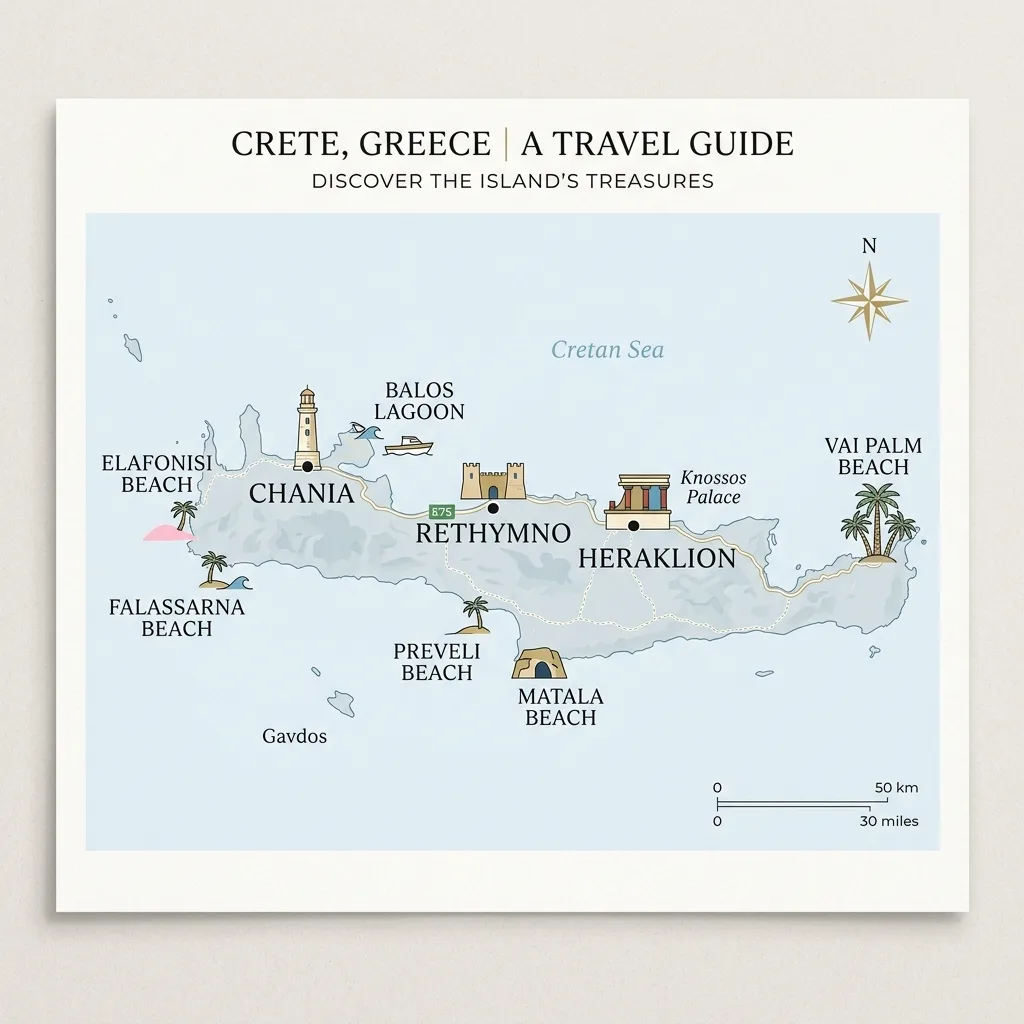
Crete stands as Greece's largest island, offering a dramatic landscape of rugged mountains, deep gorges, and ancient Minoan ruins. Its sheer scale requires a dedicated road trip to fully appreciate the distinct character of its historic coastal towns.
Main Islands: Heraklion, Chania, Knossos, South coast
Best Reached By: Heraklion Airport (HER), Chania Airport (CHQ), and Heraklion Port.
Transit Time: Reliable daily overnight car ferries connect Heraklion and Chania to Piraeus; seasonal high-speeds connect to Santorini.
Vibe: Diverse wilderness, culinary distinction, and deep Minoan history.
Best for
Long road trips, ancient history, hiking, gorges, and food
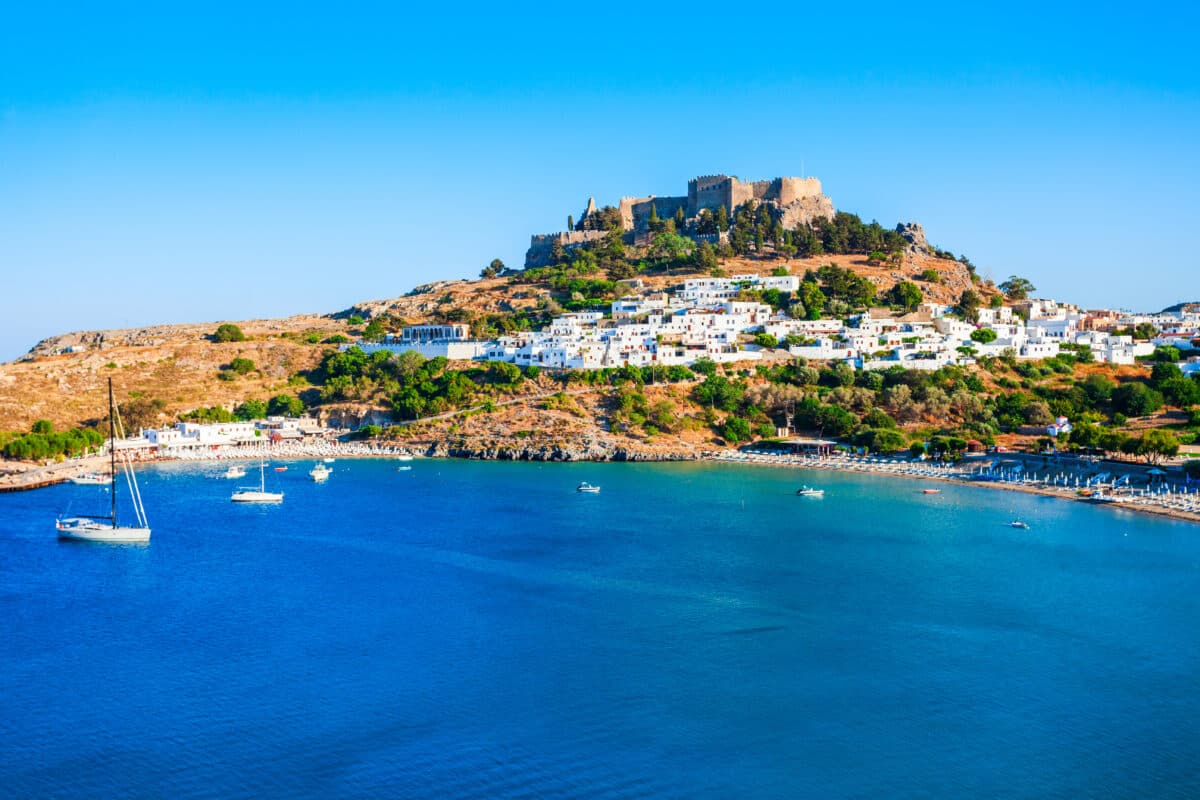
Positioned in the southeastern Aegean close to the Turkish coast, the Dodecanese islands blend sun-drenched beaches with rich medieval history. From the massive fortifications of Rhodes to the quiet spiritual heritage of Patmos, these islands offer a diverse cultural crossroads.
Main Islands: Rhodes, Kos, Patmos
Best Reached By: Rhodes Airport (RHO), Kos Airport (KGS), and Rhodes Port.
Transit Time: Excellent local catamaran networks run by Dodekanisos Seaways; long conventional ferry rides from Athens.
Vibe: Medieval fortresses, multi-cultural layers, and clear, calm waters.
Best for
Beach + history combos, longer stays, day-trips to Turkey
Key islands
Rhodes, Kos, Patmos, Symi, Kalymnos, Karpathos
How to get there
Direct seasonal flights to Rhodes (RHO) and Kos (KGS) from across Europe. Athens-to-Rhodes ferry is overnight.
The Ionian Islands hug the western coastline of Greece, presenting a lush, green landscape shaped by historically strong Venetian influences. With dramatic limestone cliffs framing famous beaches like Navagio, this region provides a cooler, more relaxed island-hopping experience.
Main Islands: Corfu, Zakynthos, Kefalonia
Best Reached By: Corfu Airport (CFU), Kefalonia Airport (EFL), and Zakynthos Airport (ZTH).
Transit Time: Disconnected from the Aegean network; travel between islands requires local car ferries or mainland connection ports.
Vibe: Venetian sophistication, lush olive groves, and dramatic sheer cliffs.
Mainland Greece anchors the country geographically and logistically. Athens and the port of Piraeus are the pivot point for almost every island itinerary, with ferries fanning out across the Aegean.
North of Athens, Delphi, Meteora, and Thessaloniki extend the map toward Macedonia. South of Athens, the Peloponnese covers Mycenae, Olympia, Mystras, and the Mani peninsula.
Thessaloniki, Macedonia, the Halkidiki three-peninsula coast, Mount Olympus, and the Meteora monasteries.
C
Central Greece
Athens, Attica, Delphi, Mount Parnassus, and Euboea / Evia island connected by bridge.
P
Peloponnese
Mycenae, Olympia, Sparta, Nafplio, the wild Mani peninsula, Monemvasia, and Kalamata.
E
Epirus & the West
Ioannina, the Zagori villages, Vikos Gorge, and dramatic Ottoman-era stone architecture.
Ferries from Athens
Map of Greece Ferry Routes
Almost every island itinerary moves through one of three Athens ports: Piraeus (the main hub), Rafina (faster for the central Cyclades), and Lavrio (the smaller north-Aegean port).
High-speed catamarans cover Athens → Santorini in about 5 hours; the conventional overnight ferry is cheaper but takes 8.
Athens-to-island ferry corridors with high-speed and conventional crossing times and starting fares.
Route
High-speed
Conventional
From
Piraeus → Santorini
~5h 15m
~8h
€59
Piraeus → Mykonos
~2h 50m
~5h
€42
Piraeus → Naxos
~3h 30m
~5h 30m
€38
Piraeus → Crete (Heraklion)
—
~9h (overnight)
€36
Piraeus → Rhodes
—
~14h (overnight)
€44
Santorini ↔ Crete
~2h (seasonal)
—
€57
Fares are 2026 starting prices for a deck seat. Last verified May 2026. Cross-check on the operator's site near departure for live availability.
About this map
The Santorini Secrets editorial team builds and maintains this map by hand. Region boundaries, port locations, and ferry pivots are drawn from Visit Greece (the Greek National Tourism Organisation) and from operator schedules we audit each season. Vector tiles and the basemap come from the open-source OpenFreeMap project, with cartography rendered via MapLibre GL JS.
The map is updated alongside our destination guides whenever ferry corridors, airport connections, or major destination openings change. If you spot stale data, please reach out via our contact page.
FAQs
Questions people ask about the map of Greece
Short, factual answers — designed to be quoted directly. Each mirrors the FAQPage schema embedded on this page so AI overviews and search engines can ingest them 1:1.
Where is Greece located on the map of Europe?
Answer: Greece is located in southeastern Europe, situated at the southern tip of the Balkan peninsula. The country sits at the crossroads of Europe, Asia, and Africa, surrounded by the Mediterranean Sea, with coastlines along the Aegean Sea to the east and the Ionian Sea to the west.
Where is Santorini on the map of Greece?
Answer: Santorini sits in the southern Aegean Sea within the Cyclades island group, about 200 km southeast of Athens. It is a volcanic island formed by an ancient eruption, and its crescent shape is visible on the map as a caldera open to the west.
What is the best way to travel between the Greek islands?
Answer: The best way to travel between most Greek islands is by ferry, using Athens ports like Piraeus or island hubs such as Paros, Naxos, Mykonos, Heraklion, and Rhodes. Flights are faster for long jumps between Athens, Crete, Rhodes, Corfu, and Santorini.
How far is Crete from Athens?
Answer: Crete is about 320 km south of Athens by air. Flights from Athens to Heraklion or Chania usually take about 50 minutes, while ferries from Piraeus to Crete typically run overnight and take roughly 8–9 hours depending on the port and operator.
Which is the largest island on the Greece map?
Answer: Crete is the largest and most populous Greek island. It is located at the southernmost edge of the Aegean Sea, stretching 260 km from east to west, and acts as a natural boundary between the Aegean and the Libyan Sea. It has two international airports (Heraklion and Chania) and is home to the ancient Minoan palace of Knossos.
Where is the capital city located on the map?
Answer: Athens, the capital city of Greece, is located in the Attica region on a peninsula reaching into the Aegean Sea, in the southern-central part of the mainland. It serves as the main air and ferry gateway and sits roughly halfway between the Ionian coast and the central Aegean.
What countries share a boundary with Greece?
Answer: Greece shares its northern land boundaries with four countries: Albania to the northwest, North Macedonia and Bulgaria to the north, and Turkey to the northeast across the Evros river. These border regions are visible on the northern edge of the map.
What seas surround Greece on the map?
Answer: Greece is surrounded by three major bodies of water: the Aegean Sea to the east (containing the Cyclades, Dodecanese, and Sporades island groups), the Ionian Sea to the west (home to Corfu, Kefalonia, and Zakynthos), and the Sea of Crete to the south. The wider Mediterranean Sea connects all three.
What are the main island groups in Greece?
Answer: The main groups travelers usually plan around are the Cyclades, Dodecanese, Ionian Islands, Sporades, and North Aegean, with Crete as a major standalone island destination.
How many Greek islands are there?
Answer: Greece has roughly 6,000 islands and islets, of which about 227 are inhabited across the Aegean, Ionian, and Mediterranean seas.
Which Greek islands are closest to Athens?
Answer: The Saronic islands — Aegina, Poros, Hydra, and Spetses — are closest to Athens, all reachable in 1–2 hours by ferry from the port of Piraeus. Among the Cyclades, Kea and Kythnos are nearest, while Mykonos, Paros, and Santorini are farther south.
How do I plan ferry routes between the Greek islands on the map?
Answer: Use the map to identify the island groups you want to connect, then open the linked ferry guide for live schedules and operators. Most inter-island routes go through Piraeus, Rafina, or a Cycladic hub like Paros, Naxos, or Mykonos, and high-speed catamarans cover the longer Athens–Santorini stretch in about 5 hours.
Can I use this map offline?
Answer: The interactive map streams vector tiles and needs an internet connection to render. The text descriptions of each region, the FAQs, and the destination guides linked from each marker remain readable offline once the page has loaded.
Map Locations Directory
The following table lists all the destinations and ferry ports shown on the interactive map above, along with their regional grouping and approximate geographic coordinates.
Directory of destinations and their coordinates shown on the interactive map
Destination
Region
Coordinates (Lat, Lng)
Athens
Athens and mainland Greece
37.9838° N, 23.7275° E
Thessaloniki
Athens and mainland Greece
40.6401° N, 22.9444° E
Santorini
The Cyclades
36.3932° N, 25.4615° E
Mykonos
The Cyclades
37.4467° N, 25.3289° E
Naxos
The Cyclades
37.1036° N, 25.3763° E
Paros
The Cyclades
37.0856° N, 25.1489° E
Chania
Crete
35.5138° N, 24.0180° E
Heraklion
Crete
35.3387° N, 25.1442° E
Nafplio
Peloponnese
37.5673° N, 22.8016° E
Monemvasia
Peloponnese
36.6876° N, 23.0560° E
Rhodes
The Dodecanese
36.4340° N, 28.2176° E
Kos
The Dodecanese
36.8938° N, 27.2877° E
Corfu
The Ionian Islands
39.6243° N, 19.9217° E
Zakynthos
The Ionian Islands
37.7871° N, 20.8992° E
Turn the map into a trip
Our locally-built itinerary planner uses these same routes and timings to draft a day-by-day plan around your dates, pace, and interests.