Emporio
Historic inland village featuring a preserved 15th-century Venetian fortress kasteli, vaulted stone passages, and windmills on Gavrilos hill.
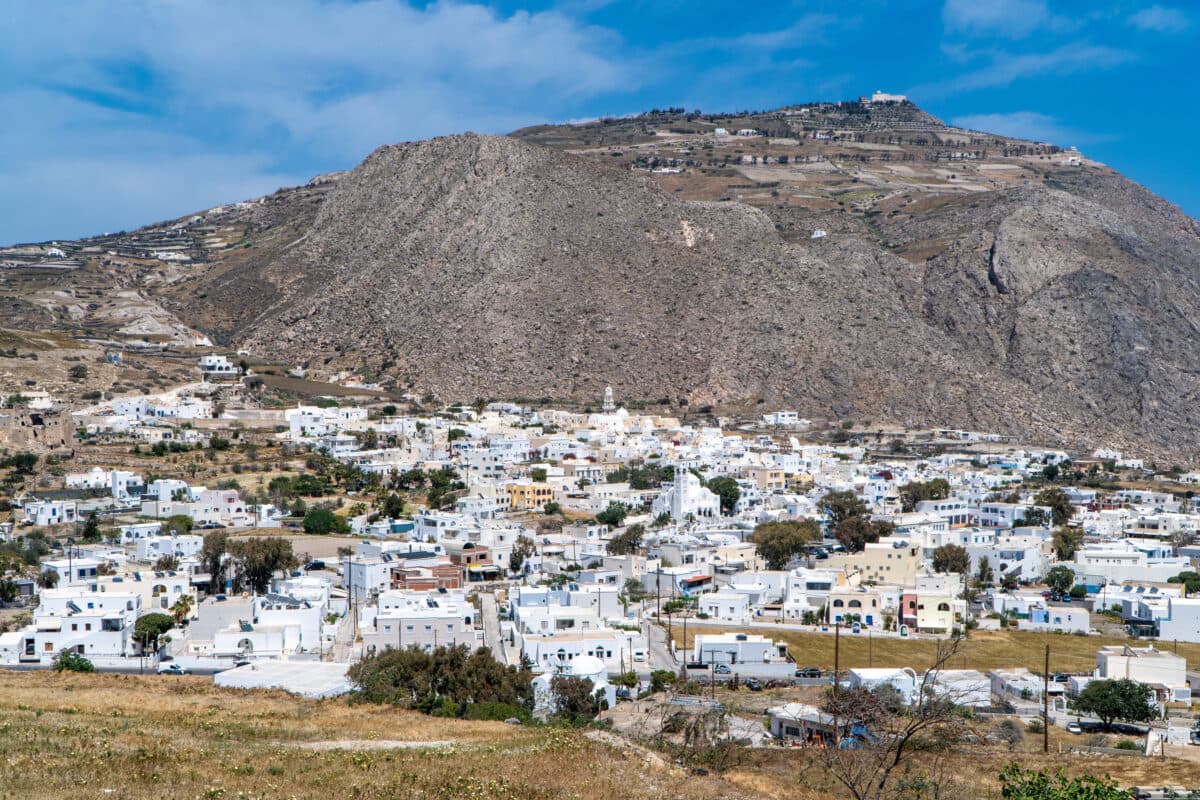
About Emporio
Emporio in Santorini is the island’s largest traditional village and one of the best places to see Santorini’s medieval inland architecture without the caldera crowds. Set in the southern part of the island near the foot of Profitis Ilias, the village is known for its fortified Kasteli, the Goulas Tower, whitewashed lanes, historic churches, and the windmills on Gavrilis Hill. It works especially well as a slower stop between Fira, Perissa, Perivolos, Akrotiri, and the south-coast beaches.
This is not the postcard cliff-edge Santorini of Oia or Imerovigli. The appeal here is different: narrow passages, quiet corners, old stonework, defensive architecture, and a more local rhythm. Add it to your Santorini things to do list if you want a village walk with history instead of another sunset crowd.

Quick facts
| Best for | Medieval village walks, photographers, architecture lovers, quiet Santorini itineraries, families with older children, and travelers staying near Perissa or Perivolos |
| Location | Southern Santorini, inland from the black beach area and about 12 km from Fira |
| Known for | Kasteli fortress, Goulas Tower, Panagia Mesiani, labyrinth alleys, whitewashed houses, overhead passages, and Gavrilis windmills |
| Entry fee | Free. It is a public village, though shops, churches, tours, cafes, and private spaces have their own rules. |
| Opening hours | The village streets are open 24/7. Visit during daylight for the best photos, easier navigation, and safer walking on steps and uneven lanes. |
| Time needed | 1 to 2 hours for a focused walk, or half a day if you add the windmills, coffee, lunch, and nearby beaches. |
| Closest beach areas | Perissa, Perivolos, Vlychada, and Agios Georgios |
| Good to know | The historic core has steps, tight alleys, and uneven surfaces, so it is not ideal for wheelchairs or strollers. |
Why visit this village?
Visit for the feeling of old Santorini. The village’s fortified center was shaped by defense, shade, and tight community life rather than by hotel terraces or caldera viewpoints. Inside the Kasteli, houses sit close together, alleys twist quickly, and small bridges, vaults, arches, and stairways create the maze-like layout that makes the place memorable.
It is also a smart contrast to the island’s famous cliff towns. If you are comparing Santorini villages, use this stop alongside Pyrgos, Megalochori, and Fira. Fira is better for nightlife and bus access. Pyrgos is better for panoramic views. Megalochori is better for wine-country village charm. This village is best for medieval lanes, defensive architecture, and a quieter south-island route.
What to see
- The Kasteli: the fortified medieval core and the main reason to visit. Walk slowly, take side passages, and pay attention to the arches, stairways, small doors, and overhead connections.
- Goulas Tower: a large Venetian-era defensive tower near the castle area. It is one of the most important landmarks in the village, but parts are fragile, so admire it respectfully from safe public points.
- Panagia Mesiani: one of the village’s most notable churches, located within the castle area and known for its bell tower and old religious details.
- Metamorfosi Sotiros and Evangelismos: two more churches that add to the village’s strong local character.
- Gavrilis windmills: a row of old windmills on the hill above the village, worth visiting for views, photos, and a sense of Santorini before tourism took over the island economy.
- Traditional houses and passages: the simple pleasure here is walking through whitewashed streets, stone details, shaded alleys, and small squares without rushing.

Best walking route

Start near the village center and walk toward the entrance of the Kasteli. Spend your first stretch inside the old fortified area, where the lanes are narrow and the architecture is most interesting. After that, loop toward the Goulas Tower, continue past the churches, and finish with the road or path toward the Gavrilis windmills if you want views and photos.
Do not turn the walk into a checklist. The village is better when you give it time. Look for small staircases, passageways, thick walls, hidden courtyards, and frames of the surrounding mountains. If you are visiting in summer, go early in the morning or late afternoon. Midday heat makes the stone lanes feel sharper, and the light is usually less flattering for photos.
How to fit it into a Santorini itinerary
The easiest plan is to pair the village with the south side of Santorini. A practical route is Fira, Pyrgos or Megalochori, this village, then Perissa or Perivolos Beach. Another good route is Akrotiri, Red Beach viewpoint, the windmills, and dinner near the black beach area. For a tighter travel day, use it as one stop in a custom one-day Santorini itinerary.
It also works well if you are planning around the beaches. Perissa and Perivolos are close, and they form the main long black beach zone on the island. Read the full Santorini beaches guide if you want to compare Perissa, Perivolos, Kamari, Vlychada, Red Beach, and other options before you build your day.
How to get there
The easiest way to reach the village is by rental car, taxi, or private transfer. It sits inland in southern Santorini, so it is convenient if you are already driving between Fira, Perissa, Perivolos, Vlychada, Akrotiri, or the airport side of the island.
You can also use public buses, but Santorini’s bus network generally works through Fira as the central hub. That means you may need to connect through Fira even if two places look close on a map. Before relying on public transport, check the latest Santorini bus schedule, especially for early mornings, evenings, and shoulder season travel.
Nearby beaches and places to combine
- Perissa Beach: the easiest beach pairing, with black sand, beach bars, restaurants, and bus access.
- Perivolos Beach: similar coastline but often a little more relaxed depending on the season and exact beach section.
- Vlychada: a quieter south-coast option with volcanic cliffs, a marina, and a different look from the black beach towns.
- Akrotiri: useful if you want archaeology, Red Beach views, or a south-island sightseeing loop.
- Pyrgos: another inland village with a castle and panoramic views, good for comparing different sides of traditional Santorini.
- Wineries: the wider inland route connects naturally with wine tasting. Start with the Santorini wineries guide if wine is part of your day.
Where to stay nearby

Staying here can make sense if you want better value, a quieter base, and easier access to Perissa, Perivolos, Vlychada, and Akrotiri. It is not the right base if your main priority is a caldera-view hotel, sunset terrace, or fast nightlife access. For that, compare Fira, Firostefani, Imerovigli, and Oia in the full where to stay in Santorini guide.
The main tradeoff is transportation. Inland villages can feel calmer and more local, but they are easier with a car or a clear bus plan. If you are staying without a vehicle, check how far your hotel is from a bus stop, restaurants, and the exact village lanes you want to explore.
Food, coffee, and shopping
The village has a quieter food and cafe scene than Fira, Oia, or the beach towns. That is part of the point. Come for a slower coffee, a simple meal, or a break before the beach rather than expecting a long strip of tourist restaurants. If dining is the main event, combine your walk with Perissa, Perivolos, Megalochori, Fira, or a wine-country route.
For shopping, expect a smaller, more local experience than the main caldera towns. You may find small stores, local products, and photo-friendly lanes, but this is not the island’s main retail district. If you want a broader travel-planning overview, the Santorini travel guide is a better starting point.
Practical tips before you go
- Wear proper shoes. The old lanes can be uneven, stepped, and slippery in places.
- Go early or late. Morning is calmer, while late afternoon gives softer light around the alleys and windmills.
- Respect private homes. The village is not a film set. Keep noise down, avoid blocking doors, and do not enter courtyards.
- Do not expect caldera views. This is an inland Santorini village, not a cliff-edge viewpoint.
- Pair it with the south coast. Perissa, Perivolos, Vlychada, Akrotiri, and wineries make the best nearby additions.
- Check transport before dinner. If you are using buses or taxis, confirm return options before staying late.
Bottom line
Emporio is worth visiting if you want the medieval, village-side version of Santorini. It is free, atmospheric, close to the black beach area, and more grounded than the island’s famous cliff towns. The best reasons to go are the Kasteli, Goulas Tower, Panagia Mesiani, the old alleys, and the Gavrilis windmills.
Do not come expecting the biggest views or the busiest restaurant scene. Come for a slow walk, good photos, historic architecture, and a break from the most commercial parts of the island. If you are already heading toward Perissa, Perivolos, Akrotiri, or the south coast, this is one of the easiest cultural stops to add.
FAQs
What is Emporio in Santorini known for?
Emporio is known for its medieval Kasteli, Goulas Tower, whitewashed alleys, historic churches, and inland village atmosphere. It is one of the best places on Santorini to see traditional architecture away from the busiest caldera towns.
Where is Emporio located?
Emporio is in the southern part of Santorini, about 12 kilometers from Fira, near the foot of Profitis Ilias. It is inland, close to Perissa, Perivolos, Vlychada, and the road toward Akrotiri.
Is Emporio worth visiting?
Yes. It is worth visiting if you want a quieter Santorini village with history, architecture, and less of the cruise-crowd feel of Oia or Fira. It is especially good for photography, slow walks, and pairing with the south-coast beaches.
How long do you need here?
Allow about 1 to 2 hours for the Kasteli, Goulas Tower area, churches, lanes, and windmill views. Add more time if you want coffee, lunch, or a beach stop at Perissa or Perivolos.
Is the village free to visit?
Yes. The village streets, Kasteli area, and windmill viewpoints are free to explore. Individual cafes, shops, churches, tours, and private properties may have their own rules or opening times.
What is the Kasteli?
The Kasteli is the fortified medieval heart of the village. Its dense layout of houses, narrow lanes, arches, stairways, and overhead passages was designed for protection and creates the maze-like feel visitors notice today.
What is Goulas Tower?
Goulas Tower is a large Venetian-era defensive tower near the entrance to the fortified settlement. It is one of the major historic landmarks in the area, although parts of it are fragile and should be viewed respectfully from safe public areas.
How do you get there from Fira?
The easiest option is by rental car, taxi, or private transfer. Public buses on Santorini usually connect through Fira, so check the current KTEL timetable before relying on the bus, especially outside peak summer.
Is it close to Perissa and Perivolos Beach?
Yes. Emporio is one of the best inland villages to combine with the black beach area. Perissa and Perivolos are nearby, so you can visit the village in the morning and spend the afternoon by the sea.
Is Emporio good for families?
It can be good for families with older children who enjoy exploring lanes, churches, and castle-like streets. It is less convenient for strollers because the historic area has steps, narrow passages, and uneven surfaces.
Is it the same as Emborio or Emporeio?
Yes. You may see the village written as Emporio, Emborio, Emporeio, or Emporeio Santorini. These usually refer to the same settlement.
Why are Santorini castles unique?
Santorini’s kastelia were fortified village cores built for protection during periods of piracy and insecurity. Unlike a single isolated castle, the defensive form often came from dense houses, limited entrances, narrow lanes, arches, and towers woven into the settlement itself.
Reviews
Loading traveler reality-check data for Emporio.
Amenities & Features
- Tourist Attraction